
NFL
U.S. Senators Launch Sweeping Investigation Into Donald Trump Son-In-Law Jared Kushner Over Allegations For Profiting Billions From Middle East Deals During Sensitive Peace Negotiations Linked to Donald Trump Administration Policies

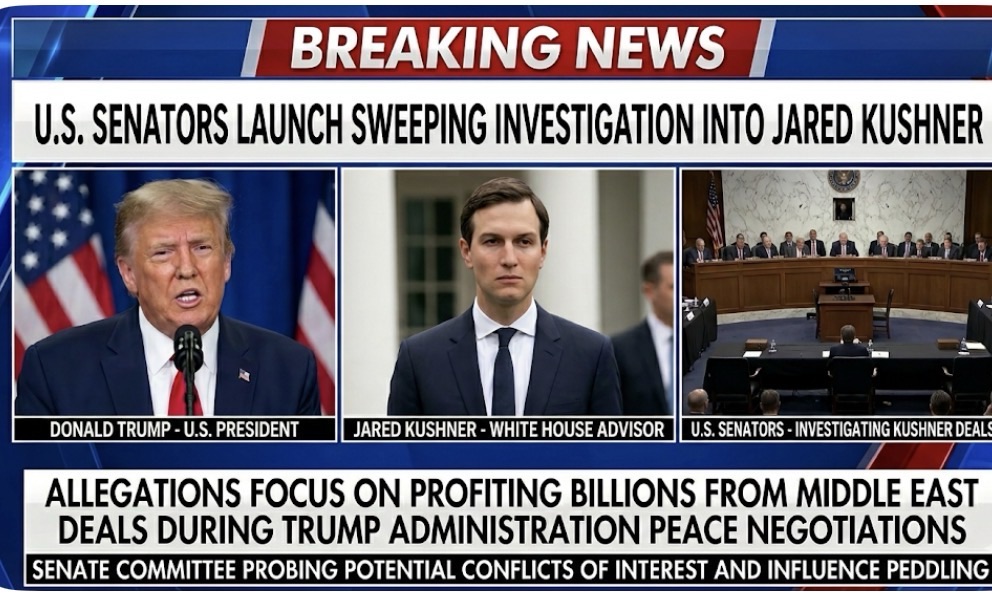
U.S. Senators have launched a wide-ranging investigation into Jared Kushner over allegations that he may have profited billions of dollars from business dealings in the Middle East during and after his time in government—raising serious questions about conflicts of interest tied to the administration of Donald Trump.
The inquiry, led by a group of Democratic lawmakers, is focusing on whether Kushner leveraged his role as a senior adviser—where he played a central part in shaping U.S. foreign policy in the region—to secure financial advantages after leaving office. Of particular interest are his connections to sovereign wealth funds and major investors from countries involved in sensitive diplomatic efforts, including those tied to the normalization agreements known as the Abraham Accords.
At the center of the controversy is Kushner’s private equity firm, Affinity Partners, which reportedly received substantial investments from Middle Eastern funds, including Saudi Arabia’s Public Investment Fund. Critics argue that these financial relationships may have been influenced by Kushner’s prior diplomatic engagements, potentially blurring the line between public service and private gain.
Lawmakers involved in the probe are seeking documents, communications, and financial disclosures to determine whether any ethical guidelines or federal laws were violated. Some senators have expressed concern that Kushner’s proximity to high-level negotiations—especially those involving security, trade, and regional alliances—could have created opportunities for undue influence or preferential treatment.
Supporters of Kushner have pushed back against the allegations, maintaining that all his business dealings have been conducted legally and transparently. They argue that his role in facilitating historic agreements between Israel and several Arab nations demonstrated diplomatic success, not personal opportunism.
The investigation also reflects broader concerns in Washington about the so-called “revolving door” between government service and private sector profits. Ethics experts note that while it is not uncommon for former officials to enter lucrative business ventures, the scale and timing of Kushner’s financial gains have drawn heightened scrutiny.
As the probe unfolds, it could have significant political and legal implications—not only for Kushner but also for the legacy of the Trump administration’s foreign policy in the Middle East. Depending on the findings, lawmakers could pursue further actions ranging from legislative reforms to potential referrals for legal review.
For now, the investigation remains in its early stages, but it underscores ongoing debates over accountability, transparency, and the intersection of diplomacy and private business in U.S. politics.

Travis Kelce AND Taylor Swift ARE MARRIED! WEDDING CEREMONY CAPTIVATES FANS AND A-LISTERS ALIKE – Travis Kelce and Taylor Swift’s wedding is no longer a rumor. The couple officially tied the knot in a lavish ceremony that’s got the entire world talking!

Travis Kelce Caught Kissing Mystery Woman at His Bachelor Party at Bird Street — The Identity of the Woman Has Been Confirmed as Taylor’s Best…

A Surprise Homecoming: Jason and Travis Kelce have made a remarkable move that few expected. The NFL brothers recently purchased a modest house in Cleveland Heights, Ohio, close to where they were raised and first dreamed of football greatness. Rather than keeping it for themselves, they are turning the property into… see more.

BREAKING: Taylor Swift’s Divorced Parents, Andrea and Scott Swift, Remarry in a Private, Elegant Wedding — Travis Kelce Comforts Emotional Taylor as She Opens Up About the Pain She’s Carried Since Their Split… But Fans Are Left Stunned When She Announces What Many Have Suspected All Along: She’s Expecting… See More Photos

Stevie nicks and Tim McGraw set to perform at Taylor Swift and Travis Kelce’s wedding – which will be ‘bigger than the Met Gala’s. This is what we know 👇

Taylor Swift and Travis Kelce Reveal Plans for a Private Rehearsal Dinner Before Hosting an Epic 1,000-Guest Wedding Celebration

After weeks of speculation over Taylor Swift and Travis Kelce’s wedding plans, a permit has been filed for an event at Madison Square Garden over the July 4 weekend. Here’s what we know.

BREAKING: Serious Incident at the Mahomes Residence — Travis Kelce Faces Severe … After Deadly Dispute with Patrick Mahomes. Early this morning, police swarmed the home of football star Patrick Mahomes after a domestic dispute escalated into an unthinkable act of violence. Reports indicate that Travis Kelce has been confirmed…

OMG! TAYLOR IS MARRIED! You won’t believe the deeply emotional moment Taylor Swift walked down the aisle with her parents! The breathtaking custom dress, the bittersweet tears, and Travis waiting at the altar… it’s pure magic!

OMG! Travis Kelce and Taylor Swift Turn Heads at Met Gala 2026, Turning the Red Carpet into a Romantic Stage—but Fans Roast Their Outfits

New York Knicks Say They’ll be Declining White House Invitation from Donald Trump After NBA Championship Victory, Announce Massive Post-Parade Celebration Headlined by Taylor Swift
