
NFL
China Delivers Strong Rejection to US Threats of 100% Tariffs, Vowing to Continue Iranian Oil Imports Despite American Pressure on Beijing’s Energy Security

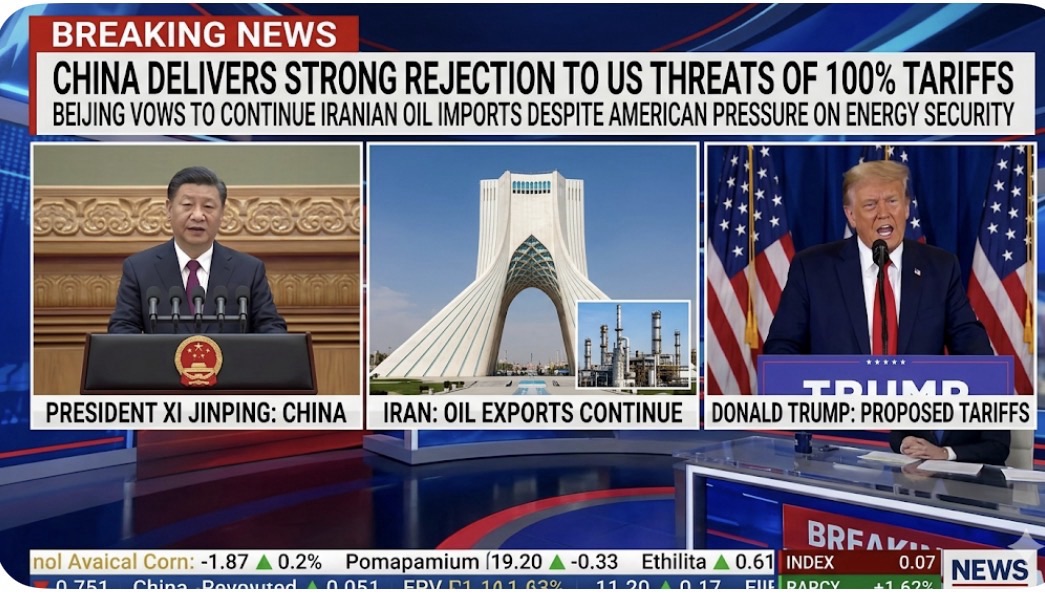
China has issued a firm and unequivocal response to escalating pressure from the United States, rejecting threats of sweeping 100% tariffs and reaffirming its commitment to maintaining energy ties with Iran. The move underscores rising tensions between the world’s two largest economies, as geopolitical rivalry increasingly intersects with global energy security.
In a strongly worded statement, Chinese officials dismissed the proposed tariffs as “economic coercion,” arguing that such measures violate international trade norms and undermine global market stability. Beijing made clear that it will not yield to external pressure when it comes to safeguarding its national interests—particularly its energy supply, which remains a critical pillar of its economic growth.
At the center of the dispute is China’s continued importation of Iranian oil, a practice that has long been a point of contention with Washington. The United States has repeatedly sought to isolate Iran economically through sanctions, targeting its oil exports as a key source of revenue. However, China has resisted these efforts, maintaining that its trade with Iran is lawful and based on mutual benefit.
Analysts suggest that China’s stance reflects both strategic and economic calculations. Iran provides a reliable and often discounted source of crude oil, helping China diversify its energy imports amid global uncertainties. By continuing these imports, Beijing not only secures a steady energy flow but also signals its resistance to what it perceives as unilateral U.S. dominance over global trade and sanctions regimes.
The U.S. threat of imposing 100% tariffs on Chinese goods marks a significant escalation in economic tensions. Such a move could severely disrupt bilateral trade, potentially triggering retaliatory measures from Beijing and deepening the divide between the two powers. Experts warn that a full-scale tariff war could have far-reaching consequences for global supply chains, inflation, and economic growth.
China, for its part, has hinted at countermeasures should Washington proceed with the tariffs. While specific actions have not been detailed, past disputes suggest Beijing could respond with tariffs of its own, restrictions on U.S. companies operating in China, or further strengthening of economic alliances with other nations.
The situation also highlights the broader geopolitical alignment between China and Iran, which has grown closer in recent years. Their partnership extends beyond energy, encompassing infrastructure development, trade cooperation, and strategic coordination in the face of Western pressure.
As tensions continue to rise, the standoff presents a critical test for global diplomacy. Whether the two sides can de-escalate or will move toward deeper confrontation remains uncertain. What is clear, however, is that the intersection of trade policy and energy security is becoming an increasingly volatile arena in international relations, with consequences that could reshape the global economic landscape.

Travis Kelce AND Taylor Swift ARE MARRIED! WEDDING CEREMONY CAPTIVATES FANS AND A-LISTERS ALIKE – Travis Kelce and Taylor Swift’s wedding is no longer a rumor. The couple officially tied the knot in a lavish ceremony that’s got the entire world talking!

Travis Kelce Caught Kissing Mystery Woman at His Bachelor Party at Bird Street — The Identity of the Woman Has Been Confirmed as Taylor’s Best…

A Surprise Homecoming: Jason and Travis Kelce have made a remarkable move that few expected. The NFL brothers recently purchased a modest house in Cleveland Heights, Ohio, close to where they were raised and first dreamed of football greatness. Rather than keeping it for themselves, they are turning the property into… see more.

BREAKING: Taylor Swift’s Divorced Parents, Andrea and Scott Swift, Remarry in a Private, Elegant Wedding — Travis Kelce Comforts Emotional Taylor as She Opens Up About the Pain She’s Carried Since Their Split… But Fans Are Left Stunned When She Announces What Many Have Suspected All Along: She’s Expecting… See More Photos

Stevie nicks and Tim McGraw set to perform at Taylor Swift and Travis Kelce’s wedding – which will be ‘bigger than the Met Gala’s. This is what we know 👇

Taylor Swift and Travis Kelce Reveal Plans for a Private Rehearsal Dinner Before Hosting an Epic 1,000-Guest Wedding Celebration

After weeks of speculation over Taylor Swift and Travis Kelce’s wedding plans, a permit has been filed for an event at Madison Square Garden over the July 4 weekend. Here’s what we know.

BREAKING: Serious Incident at the Mahomes Residence — Travis Kelce Faces Severe … After Deadly Dispute with Patrick Mahomes. Early this morning, police swarmed the home of football star Patrick Mahomes after a domestic dispute escalated into an unthinkable act of violence. Reports indicate that Travis Kelce has been confirmed…

OMG! TAYLOR IS MARRIED! You won’t believe the deeply emotional moment Taylor Swift walked down the aisle with her parents! The breathtaking custom dress, the bittersweet tears, and Travis waiting at the altar… it’s pure magic!

OMG! Travis Kelce and Taylor Swift Turn Heads at Met Gala 2026, Turning the Red Carpet into a Romantic Stage—but Fans Roast Their Outfits

New York Knicks Say They’ll be Declining White House Invitation from Donald Trump After NBA Championship Victory, Announce Massive Post-Parade Celebration Headlined by Taylor Swift
