
NFL
China Threatens to Withhold Emergency Energy Supplies from Philippines Unless It Drops Massive US-Led Balikatan 2026 Drills – Just as President Donald Trump Pushes Deeper Alliance Ties and Economic Zones to Counter Beijing’s Influence in the South China Sea

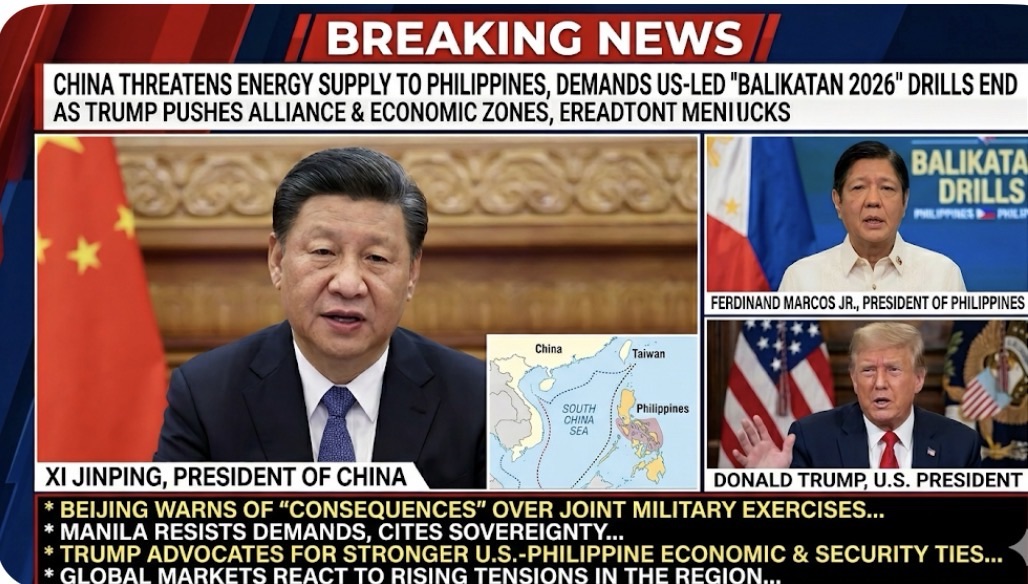
Tensions in the South China Sea have escalated sharply following reports that China is threatening to withhold emergency energy supplies from the Philippines unless Manila distances itself from the upcoming Balikatan 2026 military exercises.
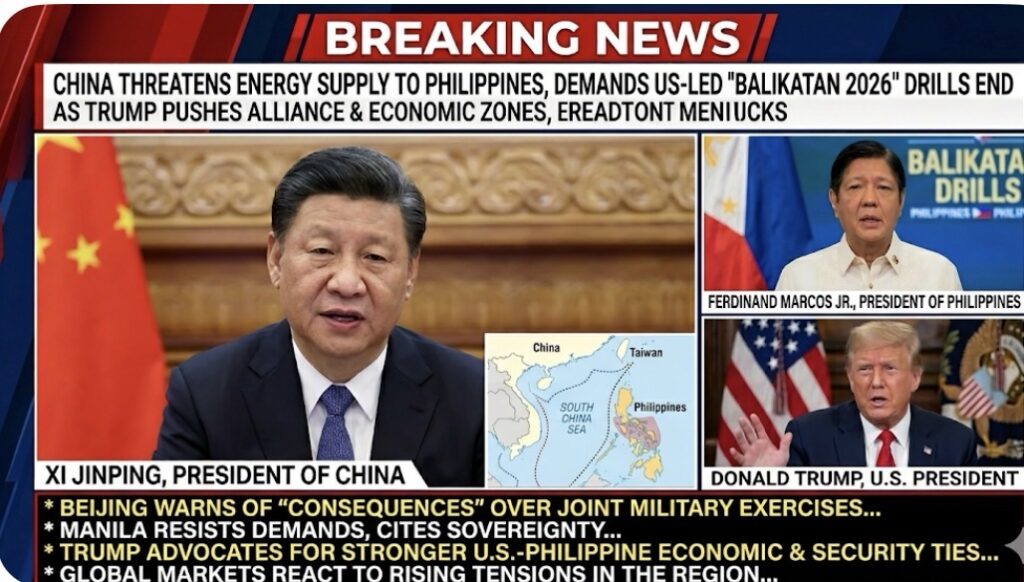
According to officials familiar with the situation, Beijing has issued a quiet but firm warning to Philippine authorities, signaling that continued participation in the large-scale U.S.-led drills could come with economic consequences—particularly in the energy sector, where the Philippines remains vulnerable to supply disruptions during peak demand periods and natural disasters.
The Balikatan exercises, which have grown significantly in scale and scope in recent years, are expected to involve advanced joint operations, including maritime defense, amphibious landings, and missile systems testing. The drills are seen as a key pillar of strengthening military coordination between the Philippines and the United States amid rising tensions in contested waters.
The standoff comes as Donald Trump intensifies efforts to deepen strategic ties with Manila, promoting expanded economic zones, infrastructure investments, and defense cooperation aimed at countering China’s growing influence in the region. Trump’s approach underscores a broader U.S. strategy to reinforce alliances across the Indo-Pacific and challenge Beijing’s territorial claims.
Chinese officials, while not publicly confirming the threat, have repeatedly criticized the drills as destabilizing and provocative. Beijing views the growing U.S.-Philippines defense partnership as a direct challenge to its regional ambitions, particularly in areas where overlapping territorial claims have led to repeated confrontations between Chinese and Philippine vessels.
For the Philippines, the situation presents a difficult balancing act. On one hand, strengthening ties with Washington offers security assurances and military support. On the other, China remains a major economic partner, and any disruption in energy supplies could have immediate domestic consequences, including power shortages and rising costs.
Regional analysts warn that the use of energy leverage in geopolitical disputes marks an escalation in tactics, potentially setting a precedent for economic coercion in Southeast Asia. The dispute also raises concerns among neighboring countries, many of which rely on both U.S. security guarantees and Chinese trade.
As preparations for Balikatan 2026 continue, Philippine officials have yet to signal any intention of scaling back participation. Instead, early indications suggest Manila is doubling down on its alliance with the U.S., even as it seeks diplomatic channels to ease tensions with Beijing.
The coming months will likely determine whether this dispute remains a war of words or evolves into a broader economic and strategic confrontation—one that could reshape power dynamics across the Indo-Pacific.

Travis Kelce AND Taylor Swift ARE MARRIED! WEDDING CEREMONY CAPTIVATES FANS AND A-LISTERS ALIKE – Travis Kelce and Taylor Swift’s wedding is no longer a rumor. The couple officially tied the knot in a lavish ceremony that’s got the entire world talking!

Travis Kelce Caught Kissing Mystery Woman at His Bachelor Party at Bird Street — The Identity of the Woman Has Been Confirmed as Taylor’s Best…

A Surprise Homecoming: Jason and Travis Kelce have made a remarkable move that few expected. The NFL brothers recently purchased a modest house in Cleveland Heights, Ohio, close to where they were raised and first dreamed of football greatness. Rather than keeping it for themselves, they are turning the property into… see more.

BREAKING: Taylor Swift’s Divorced Parents, Andrea and Scott Swift, Remarry in a Private, Elegant Wedding — Travis Kelce Comforts Emotional Taylor as She Opens Up About the Pain She’s Carried Since Their Split… But Fans Are Left Stunned When She Announces What Many Have Suspected All Along: She’s Expecting… See More Photos

Stevie nicks and Tim McGraw set to perform at Taylor Swift and Travis Kelce’s wedding – which will be ‘bigger than the Met Gala’s. This is what we know 👇

Taylor Swift and Travis Kelce Reveal Plans for a Private Rehearsal Dinner Before Hosting an Epic 1,000-Guest Wedding Celebration

After weeks of speculation over Taylor Swift and Travis Kelce’s wedding plans, a permit has been filed for an event at Madison Square Garden over the July 4 weekend. Here’s what we know.

BREAKING: Serious Incident at the Mahomes Residence — Travis Kelce Faces Severe … After Deadly Dispute with Patrick Mahomes. Early this morning, police swarmed the home of football star Patrick Mahomes after a domestic dispute escalated into an unthinkable act of violence. Reports indicate that Travis Kelce has been confirmed…

OMG! TAYLOR IS MARRIED! You won’t believe the deeply emotional moment Taylor Swift walked down the aisle with her parents! The breathtaking custom dress, the bittersweet tears, and Travis waiting at the altar… it’s pure magic!

OMG! Travis Kelce and Taylor Swift Turn Heads at Met Gala 2026, Turning the Red Carpet into a Romantic Stage—but Fans Roast Their Outfits

New York Knicks Say They’ll be Declining White House Invitation from Donald Trump After NBA Championship Victory, Announce Massive Post-Parade Celebration Headlined by Taylor Swift
