
NFL
Ceasefire in US-Iran War Extended Indefinitely as Talks Stall: Trump Holds Attacks Pending Unified Proposal from Tehran but Directs Military to Continue Blockading Iranian Ports

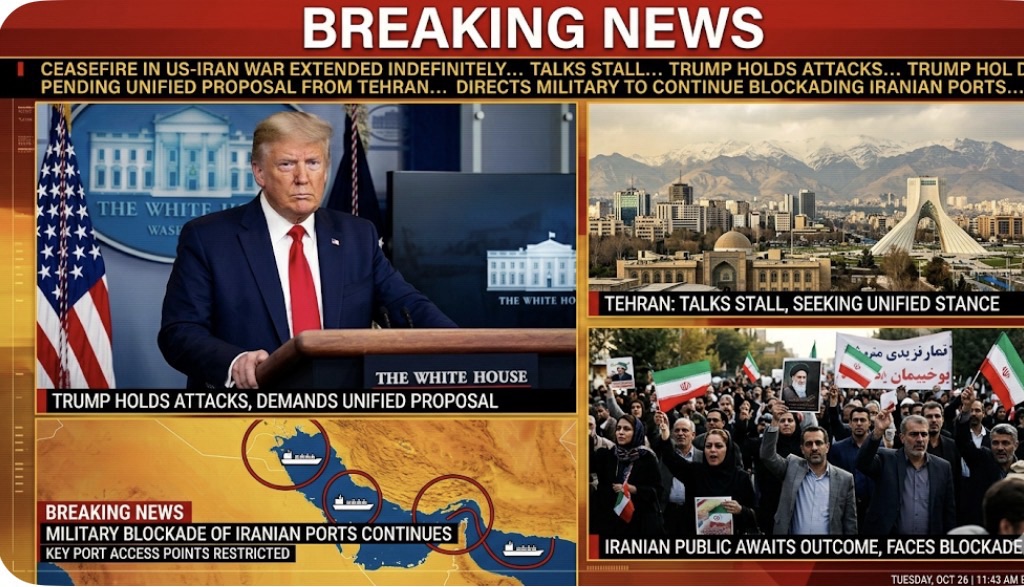
The fragile ceasefire between the United States and Iran has been extended indefinitely as diplomatic negotiations continue to stall, with both sides unable to agree on a framework for a lasting settlement. The decision comes amid rising tensions over maritime security in the Strait of Hormuz and continued disagreement over the conditions for resuming formal talks.
U.S. President Donald Trump announced the extension while reiterating that military strikes remain an option if diplomacy fails. According to recent statements, Trump has said he will hold off on further attacks while awaiting what he describes as a “unified proposal” from Tehran that could form the basis of a broader agreement.
Despite the pause in direct military escalation, the United States has continued enforcing a naval blockade on Iranian ports, aimed at restricting maritime traffic linked to Iran’s energy exports and shipping routes. The blockade, first introduced after earlier rounds of failed negotiations, remains a central pressure tool in Washington’s strategy, even as the ceasefire is maintained.
The administration has argued that the blockade is intended to limit Iran’s ability to generate revenue from oil shipments while pushing its leadership toward a coordinated negotiating position. Trump has insisted that internal divisions within Iran’s political structure are preventing meaningful progress, and that only a unified stance from Tehran can move talks forward.
Iran, however, has strongly rejected the U.S. approach, accusing Washington of using economic pressure and military threats to dictate terms. Iranian officials have described the continued blockade as a violation of the ceasefire framework and have refused to rejoin negotiations under what they call coercive conditions.
Talks mediated by regional actors have so far failed to produce a breakthrough, with both sides remaining firm on core demands. The United States continues to push for restrictions on Iran’s nuclear activities and regional influence, while Iran insists on relief from sanctions and an end to maritime restrictions before returning to the negotiating table.
The Strait of Hormuz, a critical global energy corridor, remains a key point of tension, with reduced commercial traffic and ongoing uncertainty affecting international oil markets. Analysts say the continued blockade, combined with stalled diplomacy, leaves the ceasefire in a precarious position despite its formal extension.
For now, the situation remains in a state of suspended escalation—military action paused but not ruled out, diplomatic talks frozen, and economic pressure continuing through maritime enforcement—leaving the broader U.S.–Iran crisis unresolved.

Donald Trump Escorted From White House Correspondents’ Dinner After Shooting as FBI Examines Last-Minute 5 BTC Transaction Linked to Suspect
Tehran Officially States China Is Destined to Replace America as the Dominant Global Power, Citing Shifting International Alliances
President Trump Rejects Quick Iran Agreement, Doubles Down on Blockade That Denies Regime Money and Weakens Its Economy

President Trump Declares US Will Take Over Cuba Almost Immediately After Completing Military Operations in Iran: ‘We’ll Finish One First, I Like to Finish a Job’

Tehran Sends Fresh Peace Offer to Washington Through Pakistan Amid Fragile Ceasefire – Insiders Warn This Could Be the Last Chance to Avoid Escalation in the 2026 Iran Conflict

Trump Announces Review of Possible U.S. Troop Reductions in Germany While Threatening Withdrawals from Italy and Spain Over Allies’ Refusal to Support American Military Operations Against Iran

As Trump Rejects Iran’s Proposal to Reopen the Strait of Hormuz and Prioritize Nuclear Talks Later, Parliament Deputy Speaker Warns Washington Must Yield to Tehran’s Terms or Confront Nationwide Resistance and Potential Unprecedented Retaliatory Actions

Diplomatic Standoff Intensifies: US Dismisses Iran’s Recent Peace Initiative While Iranian Officials Insist They Require No External Talks to Determine Their Path Forward

Trump Administration Expresses Dissatisfaction with Iran’s Latest Proposal to Reopen the Strait of Hormuz Without Immediate Concessions on Its Nuclear Program, Signaling Potential for Extended Naval Blockade

Trump Administration Remains Skeptical of Iran’s Latest Peace Proposal That Seeks to Reopen the Strait of Hormuz and End the War Without Addressing the Nuclear Program Upfront

China Delivers Strong Rejection to US Threats of 100% Tariffs, Vowing to Continue Iranian Oil Imports Despite American Pressure on Beijing’s Energy Security
