
NFL
China Firmly Rejects Trump’s Request for Military Forces to Secure the Strait of Hormuz, Insisting It Is an International Waterway Where No Foreign Interference Should Occur

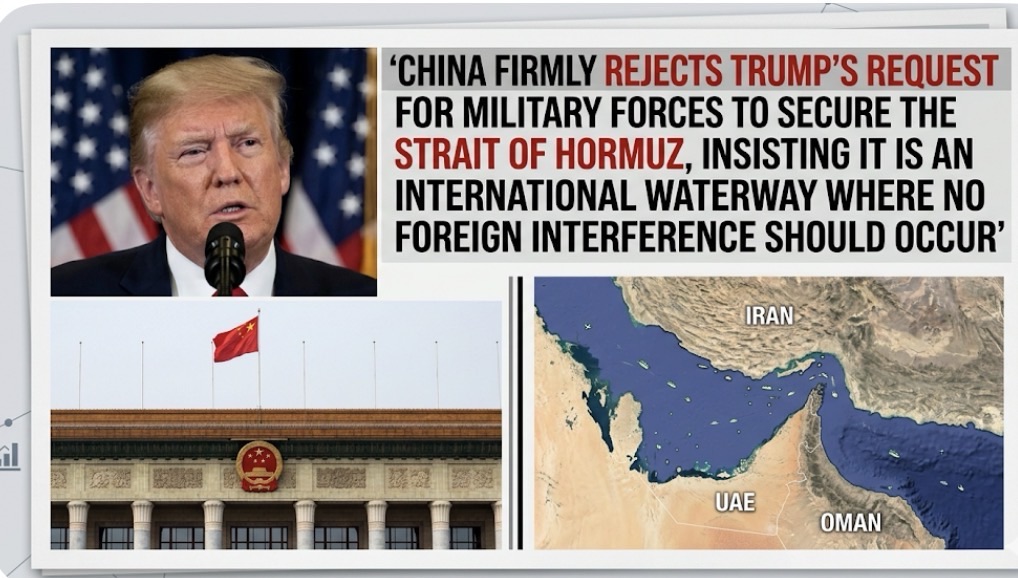
China has firmly rejected a reported request from Donald Trump to deploy military forces aimed at securing the strategically vital Strait of Hormuz, emphasizing that the waterway is an international passage that should remain free from foreign interference.
In a strongly worded response, Chinese officials reiterated their longstanding position that the Strait of Hormuz—through which a significant portion of the world’s oil supply flows—must remain open and governed by international maritime law. Beijing stressed that any attempt by external powers to militarize or unilaterally control the region risks escalating already fragile tensions in the Middle East.
The reported request from Donald Trump comes amid heightened geopolitical uncertainty surrounding energy security and regional stability. While the details of the proposal remain unclear, it is believed to involve increased military coordination or presence aimed at safeguarding commercial shipping routes from potential threats.
However, China dismissed the idea, arguing that such actions could be perceived as provocative and counterproductive. Officials warned that introducing additional foreign military forces into the area could inflame tensions rather than ensure safe passage for global trade.
“The Strait of Hormuz is not the domain of any single country,” a spokesperson said, underscoring China’s commitment to multilateralism and diplomatic solutions. Beijing instead called for dialogue and cooperation among regional stakeholders, urging all parties to avoid actions that could destabilize critical shipping lanes.
The Strait of Hormuz remains one of the most strategically sensitive waterways in the world, serving as a crucial link between the Persian Gulf and international markets. Any disruption in the area can have immediate and far-reaching consequences for global energy prices and economic stability.
Analysts say China’s rejection reflects its broader foreign policy approach, which often prioritizes sovereignty, non-intervention, and stability in key international corridors. As a major importer of oil, China has a vested interest in keeping the strait open—but without direct military escalation.
As tensions continue to simmer, the situation highlights the complex balance between securing global trade routes and avoiding further militarization of already volatile regions. With both economic and geopolitical stakes high, the future of the Strait of Hormuz remains a focal point in international diplomacy.

Travis Kelce AND Taylor Swift ARE MARRIED! WEDDING CEREMONY CAPTIVATES FANS AND A-LISTERS ALIKE – Travis Kelce and Taylor Swift’s wedding is no longer a rumor. The couple officially tied the knot in a lavish ceremony that’s got the entire world talking!

Travis Kelce Caught Kissing Mystery Woman at His Bachelor Party at Bird Street — The Identity of the Woman Has Been Confirmed as Taylor’s Best…

A Surprise Homecoming: Jason and Travis Kelce have made a remarkable move that few expected. The NFL brothers recently purchased a modest house in Cleveland Heights, Ohio, close to where they were raised and first dreamed of football greatness. Rather than keeping it for themselves, they are turning the property into… see more.

BREAKING: Taylor Swift’s Divorced Parents, Andrea and Scott Swift, Remarry in a Private, Elegant Wedding — Travis Kelce Comforts Emotional Taylor as She Opens Up About the Pain She’s Carried Since Their Split… But Fans Are Left Stunned When She Announces What Many Have Suspected All Along: She’s Expecting… See More Photos

Stevie nicks and Tim McGraw set to perform at Taylor Swift and Travis Kelce’s wedding – which will be ‘bigger than the Met Gala’s. This is what we know 👇

Taylor Swift and Travis Kelce Reveal Plans for a Private Rehearsal Dinner Before Hosting an Epic 1,000-Guest Wedding Celebration

After weeks of speculation over Taylor Swift and Travis Kelce’s wedding plans, a permit has been filed for an event at Madison Square Garden over the July 4 weekend. Here’s what we know.

BREAKING: Serious Incident at the Mahomes Residence — Travis Kelce Faces Severe … After Deadly Dispute with Patrick Mahomes. Early this morning, police swarmed the home of football star Patrick Mahomes after a domestic dispute escalated into an unthinkable act of violence. Reports indicate that Travis Kelce has been confirmed…

OMG! TAYLOR IS MARRIED! You won’t believe the deeply emotional moment Taylor Swift walked down the aisle with her parents! The breathtaking custom dress, the bittersweet tears, and Travis waiting at the altar… it’s pure magic!

OMG! Travis Kelce and Taylor Swift Turn Heads at Met Gala 2026, Turning the Red Carpet into a Romantic Stage—but Fans Roast Their Outfits

New York Knicks Say They’ll be Declining White House Invitation from Donald Trump After NBA Championship Victory, Announce Massive Post-Parade Celebration Headlined by Taylor Swift
