
NFL
U.S. Special Forces Pull Off Bold Double Rescue in Hostile Iran Territory; Trump: “Our Military Is Unmatched”Both pilot and weapons systems officer now safe following F-15E shoot-down.

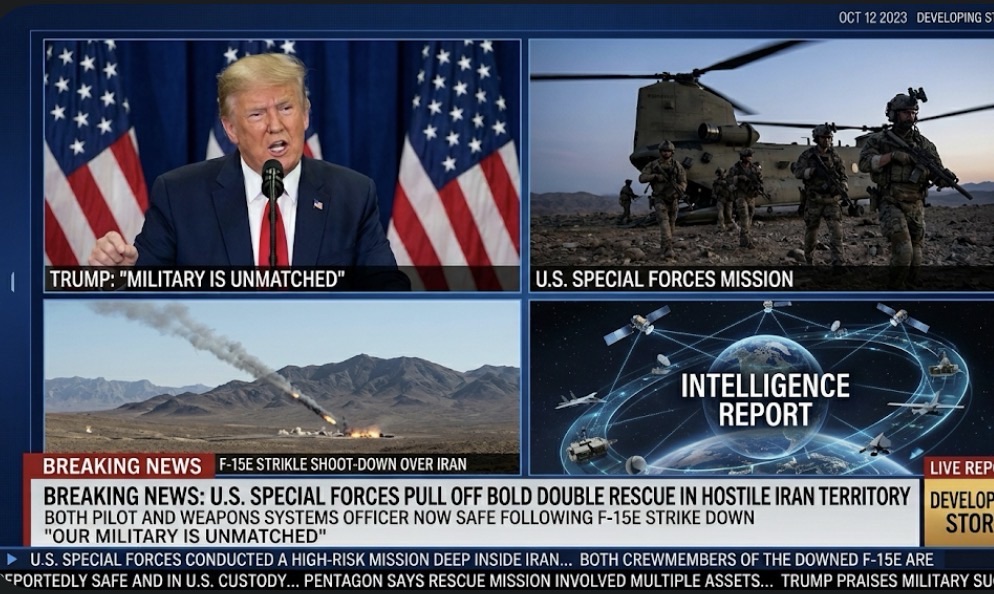
U.S. Special Operations forces have successfully carried out a high-risk, behind-enemy-lines rescue mission in Iran, extracting both crew members of a downed F-15E Strike Eagle in what officials are describing as one of the most daring operations of the ongoing conflict.
The dramatic recovery comes after the fighter jet was shot down over southwestern Iran, forcing both the pilot and weapons systems officer to eject into hostile territory. Initial rescue efforts secured one airman within hours, while an intense search-and-rescue operation continued for more than a day to locate the second crew member.
According to U.S. officials, Special Forces teams operated deep inside Iranian territory under constant threat from Iranian military units, including the Islamic Revolutionary Guard Corps (IRGC), which was also actively searching for the downed airmen.
The second extraction reportedly involved coordinated air cover, intelligence surveillance, and ground maneuvering under combat conditions. Despite the dangers, both airmen were successfully recovered and safely evacuated from Iran without confirmed U.S. fatalities.
“This was a nightmare scenario — and our people executed flawlessly,” one U.S. defense official said, emphasizing the complexity of conducting rescue operations in contested airspace and hostile terrain.
President Donald Trump, who had been briefed throughout the mission, praised the operation shortly after confirmation of the second rescue.
“Our military is unmatched anywhere in the world,” Trump said in a statement. “Against all odds, they brought our people home.”
The incident marks a significant escalation in the ongoing war, as it is one of the first confirmed cases of a U.S. crewed aircraft being shot down inside Iran during the conflict.
Military analysts say the success of the operation underscores the capabilities of elite U.S. personnel recovery units, often trained for extreme scenarios including combat rescues under fire and deep infiltration missions.
Still, the episode highlights the growing risks facing U.S. forces in the region, where advanced air defenses, difficult terrain, and rapid enemy response times make such missions increasingly perilous.
With both airmen now safe, attention is shifting back to the broader conflict, which continues to intensify amid mounting geopolitical tensions and ongoing military strikes across the region.

As Donald Trump’s Deadline for Reopening the Strait of Hormuz Approaches, Iran’s Deputy Sports Minister Calls on Youth, Athletes, Artists and Students to Form Symbolic Human Chains Around Power Plants to Protest Potential U.S. Strikes

Taylor Swift and Travis Kelce Celebrate Easter Alongside Jason Kelce, Kylie Kelce, Donna Kelce, and Ed Kelce

President Trump Blasts Leak That Transformed Secret Operation to Extract Injured U.S. Airman Deep Inside Iran Into a Much More Difficult and Perilous Mission, Pledging to Treat It as a Serious National Security Matter With Legal Consequences

U.S. Faces Major Setback in Iran as Another Fighter Jet Falls Despite President Trump’s Claims of Air Superiority, With Rescue Teams Scrambling to Locate Missing Pilot Amid Rising Regional Tensions

After More Than 30 Hours Behind Enemy Lines, Both U.S. F‑15E Pilots Are Rescued by Delta Force in a High-Risk Operation and Deliver Statements Alongside President Trump Praising Their Survival and the Bravery of American Forces

Donald Trump’s Health Takes Critical Turn; White House Issues Official Declaration to Congress Amid Escalating Concerns Over President’s Medical Emergency at Walter Reed

UK Signals Willingness to Join U.S.-Led Effort to Secure Strait of Hormuz, Raising Prospects of a Joint Operation to Protect Global Oil Shipping Amid Rising Regional Tensions

“Huge Win for Peace Through Strength with President Trump! US-Israel Strikes Take Out Iran’s Intelligence Chief Majid Khademi – Their Network is Being Dismantled Piece by Piece. What a Great Day for the World!”

BREAKING NEWS: Strait of Hormuz Reopens After U.S. Forces Execute Precision Strike on Iranian Mining Infrastructure, Eliminating Threat to Global Oil Supply

Iran Vows Swift and Decisive Retaliation Against Any US Strikes on Its Infrastructure as Foreign Ministry Brands Trump’s “Power Plant Day” Threats a “Criminal Mindset” and Public Incitement to War Crimes

“There Will Be Nothing Like It”: Trump Warns of Major Strikes on Iran’s Power Plants and Bridges if Hormuz Remains Closed Past Tuesday, Following F-15E Crew Rescue and Rising Oil Prices
