
NFL
U.S. Forces Seize Iran’s ‘Touska’ Cargo Ship as Donald Trump Links Shipment to Chinese Chemical Supply Chain for Missile Production

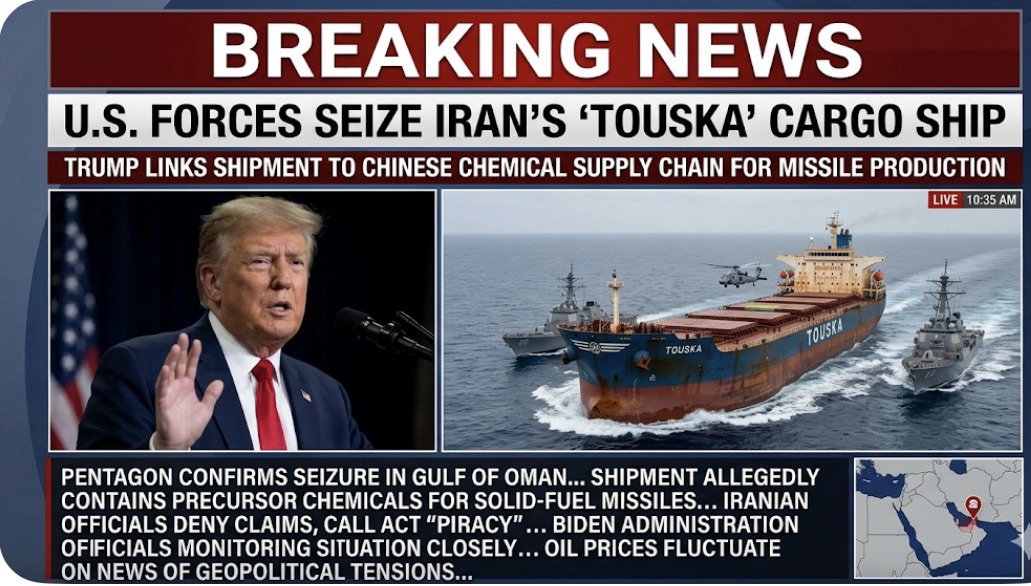
U.S. forces have seized an Iranian cargo vessel identified as the Touska following a maritime interception operation in the Gulf region, with Donald Trump claiming the ship was carrying materials linked to a Chinese chemical supply chain allegedly used in ballistic missile production.
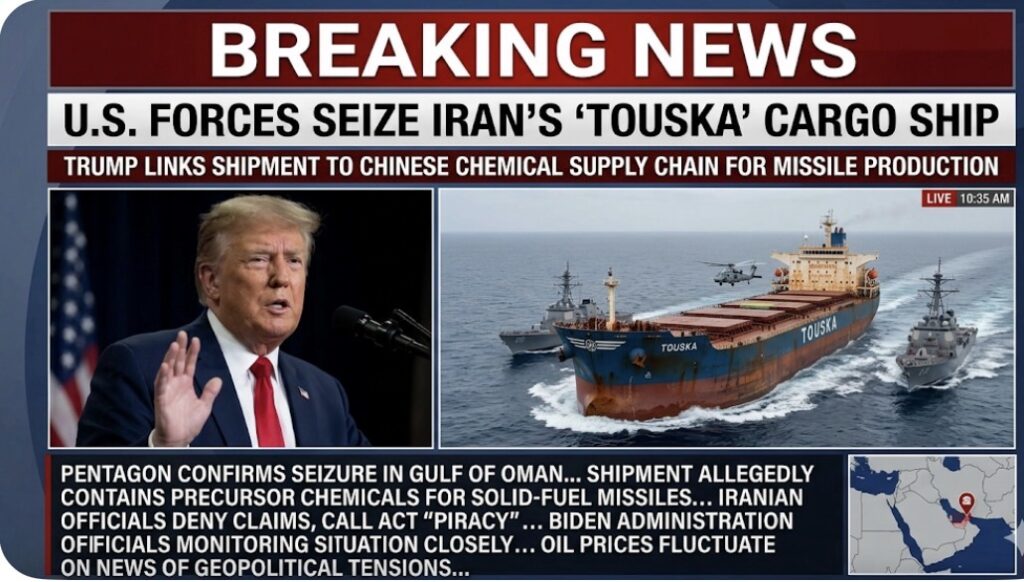
According to Trump, the vessel was stopped after attempting to proceed through a restricted maritime zone despite repeated warnings from U.S. naval forces. He stated that the ship was later disabled and boarded, and is now under U.S. control for inspection.
Trump said the intercepted cargo included industrial chemicals believed to have originated from China and intended for use in Iran’s missile development program. He did not provide detailed evidence of the cargo contents, and independent verification of the claims has not yet been made public.
The Touska is believed to be part of a wider network of Iranian commercial shipping routes that have faced increasing scrutiny amid sanctions enforcement and heightened maritime security operations in the region. U.S. officials have long accused Iran of using commercial vessels to transport restricted materials linked to its military programs, allegations Tehran has consistently denied.
The seizure comes amid already elevated tensions between the United States and Iran, particularly over maritime activity in strategic waterways such as the Strait of Hormuz, through which a significant portion of global oil shipments pass.
Iranian officials have condemned the interception, describing it as an unlawful seizure of a civilian vessel and accusing the United States of escalating regional instability. Tehran has not confirmed the nature of the cargo aboard the Touska.
The alleged connection to Chinese-origin chemicals has also added a broader geopolitical dimension to the incident. China has not issued a detailed response to the specific claims regarding the vessel, though it has previously criticized unilateral enforcement actions that affect international trade routes.
The United States has not released full technical assessments of the cargo or the intelligence used to justify the interception. The vessel remains under investigation as authorities assess its route, ownership structure, and shipment details.
The incident marks another flashpoint in the complex relationship between Washington, Tehran, and Beijing, with maritime enforcement, sanctions compliance, and global energy security continuing to drive tensions in the region.

Travis Kelce AND Taylor Swift ARE MARRIED! WEDDING CEREMONY CAPTIVATES FANS AND A-LISTERS ALIKE – Travis Kelce and Taylor Swift’s wedding is no longer a rumor. The couple officially tied the knot in a lavish ceremony that’s got the entire world talking!

Travis Kelce Caught Kissing Mystery Woman at His Bachelor Party at Bird Street — The Identity of the Woman Has Been Confirmed as Taylor’s Best…

A Surprise Homecoming: Jason and Travis Kelce have made a remarkable move that few expected. The NFL brothers recently purchased a modest house in Cleveland Heights, Ohio, close to where they were raised and first dreamed of football greatness. Rather than keeping it for themselves, they are turning the property into… see more.

BREAKING: Taylor Swift’s Divorced Parents, Andrea and Scott Swift, Remarry in a Private, Elegant Wedding — Travis Kelce Comforts Emotional Taylor as She Opens Up About the Pain She’s Carried Since Their Split… But Fans Are Left Stunned When She Announces What Many Have Suspected All Along: She’s Expecting… See More Photos

Stevie nicks and Tim McGraw set to perform at Taylor Swift and Travis Kelce’s wedding – which will be ‘bigger than the Met Gala’s. This is what we know 👇

Taylor Swift and Travis Kelce Reveal Plans for a Private Rehearsal Dinner Before Hosting an Epic 1,000-Guest Wedding Celebration

After weeks of speculation over Taylor Swift and Travis Kelce’s wedding plans, a permit has been filed for an event at Madison Square Garden over the July 4 weekend. Here’s what we know.

BREAKING: Serious Incident at the Mahomes Residence — Travis Kelce Faces Severe … After Deadly Dispute with Patrick Mahomes. Early this morning, police swarmed the home of football star Patrick Mahomes after a domestic dispute escalated into an unthinkable act of violence. Reports indicate that Travis Kelce has been confirmed…

OMG! TAYLOR IS MARRIED! You won’t believe the deeply emotional moment Taylor Swift walked down the aisle with her parents! The breathtaking custom dress, the bittersweet tears, and Travis waiting at the altar… it’s pure magic!

OMG! Travis Kelce and Taylor Swift Turn Heads at Met Gala 2026, Turning the Red Carpet into a Romantic Stage—but Fans Roast Their Outfits

New York Knicks Say They’ll be Declining White House Invitation from Donald Trump After NBA Championship Victory, Announce Massive Post-Parade Celebration Headlined by Taylor Swift
