
NFL
Trump Administration Under Fire as Italy Rejects US Aircraft Deployment to Sicily, Citing Breach of Legal Protocols and Failure to Secure Parliamentary Authorization

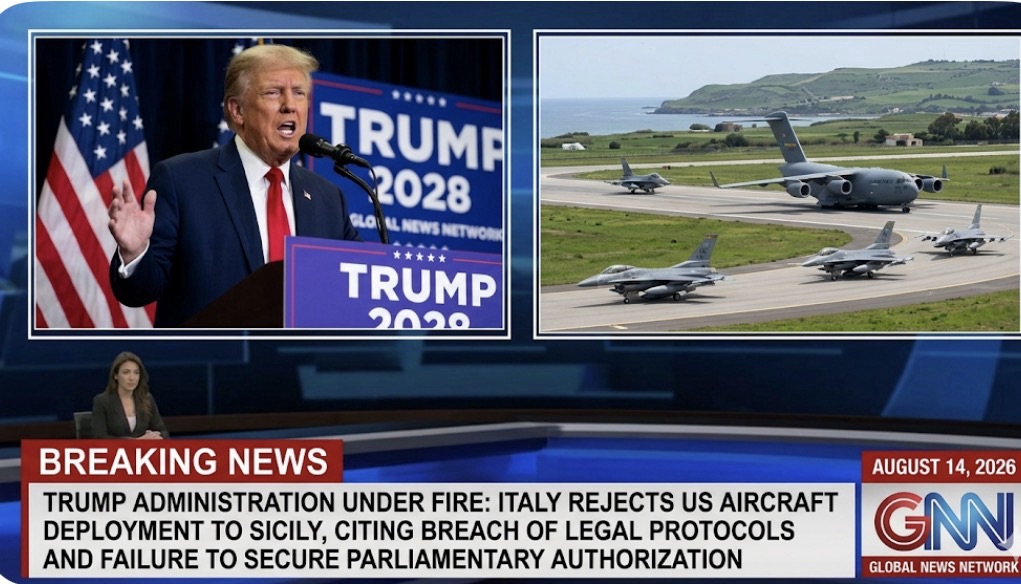
The administration of Donald Trump is facing renewed diplomatic pressure after Italian authorities refused entry to U.S. military aircraft seeking access to a key air base in Sicily. The decision, rooted in legal and procedural concerns, has sparked debate over the limits of allied cooperation and the importance of adhering to established international agreements.
According to Italian officials, the request to deploy U.S. aircraft arrived on short notice and failed to follow the parliamentary approval process required under Italy’s constitutional framework and its bilateral defense arrangements. These procedures are designed to ensure civilian oversight of foreign military operations conducted from Italian territory, particularly in sensitive geopolitical contexts.
Government representatives in Rome emphasized that the denial was not a rejection of the U.S.-Italy alliance, but rather a matter of legal compliance. Officials pointed out that any foreign military use of Italian bases—especially for operations linked to volatile regions like the Middle East—must be reviewed and authorized through proper institutional channels. Bypassing that process, they argued, would set a concerning precedent.
The incident reportedly involved aircraft en route to support heightened U.S. operations in the Middle East, where tensions have been steadily rising. While the Pentagon has not disclosed full details of the mission, defense sources suggest the deployment was part of a broader effort to reinforce American military readiness in the region.
Critics within Italy’s political sphere were quick to react, with several lawmakers warning against what they described as “procedural shortcuts” by Washington. Some called for greater transparency regarding the nature of the requested mission, while others stressed the need to uphold national sovereignty and democratic accountability.
In Washington, the development has drawn mixed reactions. Supporters of the Trump administration argue that the urgency of military operations sometimes requires rapid coordination with allies, while critics contend that ignoring established legal frameworks risks undermining trust and cooperation within NATO.
The episode highlights ongoing tensions between operational urgency and diplomatic protocol, particularly as the United States seeks to maintain a strong military posture abroad. For the Trump administration, the rejection represents not only a logistical setback but also a reminder of the complex legal and political landscapes governing international military partnerships.
As both sides seek to manage the fallout, analysts suggest that behind-the-scenes negotiations are likely underway to prevent further strain on U.S.-Italy relations. Whether the issue will escalate into a broader diplomatic dispute or be resolved quietly remains to be seen, but it underscores the delicate balance between alliance unity and national legal obligations in an increasingly unstable global environment.

Travis Kelce AND Taylor Swift ARE MARRIED! WEDDING CEREMONY CAPTIVATES FANS AND A-LISTERS ALIKE – Travis Kelce and Taylor Swift’s wedding is no longer a rumor. The couple officially tied the knot in a lavish ceremony that’s got the entire world talking!

Travis Kelce Caught Kissing Mystery Woman at His Bachelor Party at Bird Street — The Identity of the Woman Has Been Confirmed as Taylor’s Best…

A Surprise Homecoming: Jason and Travis Kelce have made a remarkable move that few expected. The NFL brothers recently purchased a modest house in Cleveland Heights, Ohio, close to where they were raised and first dreamed of football greatness. Rather than keeping it for themselves, they are turning the property into… see more.

BREAKING: Taylor Swift’s Divorced Parents, Andrea and Scott Swift, Remarry in a Private, Elegant Wedding — Travis Kelce Comforts Emotional Taylor as She Opens Up About the Pain She’s Carried Since Their Split… But Fans Are Left Stunned When She Announces What Many Have Suspected All Along: She’s Expecting… See More Photos

Stevie nicks and Tim McGraw set to perform at Taylor Swift and Travis Kelce’s wedding – which will be ‘bigger than the Met Gala’s. This is what we know 👇

Taylor Swift and Travis Kelce Reveal Plans for a Private Rehearsal Dinner Before Hosting an Epic 1,000-Guest Wedding Celebration

After weeks of speculation over Taylor Swift and Travis Kelce’s wedding plans, a permit has been filed for an event at Madison Square Garden over the July 4 weekend. Here’s what we know.

BREAKING: Serious Incident at the Mahomes Residence — Travis Kelce Faces Severe … After Deadly Dispute with Patrick Mahomes. Early this morning, police swarmed the home of football star Patrick Mahomes after a domestic dispute escalated into an unthinkable act of violence. Reports indicate that Travis Kelce has been confirmed…

OMG! TAYLOR IS MARRIED! You won’t believe the deeply emotional moment Taylor Swift walked down the aisle with her parents! The breathtaking custom dress, the bittersweet tears, and Travis waiting at the altar… it’s pure magic!

OMG! Travis Kelce and Taylor Swift Turn Heads at Met Gala 2026, Turning the Red Carpet into a Romantic Stage—but Fans Roast Their Outfits

New York Knicks Say They’ll be Declining White House Invitation from Donald Trump After NBA Championship Victory, Announce Massive Post-Parade Celebration Headlined by Taylor Swift
