
NFL
Political Tensions Rise Across Continents as Social Media Amplifies Claims of ICC Legal Action Against Donald Trump and Pete Hegseth Alongside Ongoing Case Involving Benjamin Netanyahu

A wave of viral claims circulating across social media platforms has sparked fresh political tension worldwide, alleging that the International Criminal Court is pursuing legal action against Donald Trump and Pete Hegseth in connection with war crimes tied to the Iran conflict. However, as of now, there is no verified evidence or official confirmation supporting these assertions, prompting concern among analysts about the rapid spread of misinformation in an already volatile geopolitical climate.
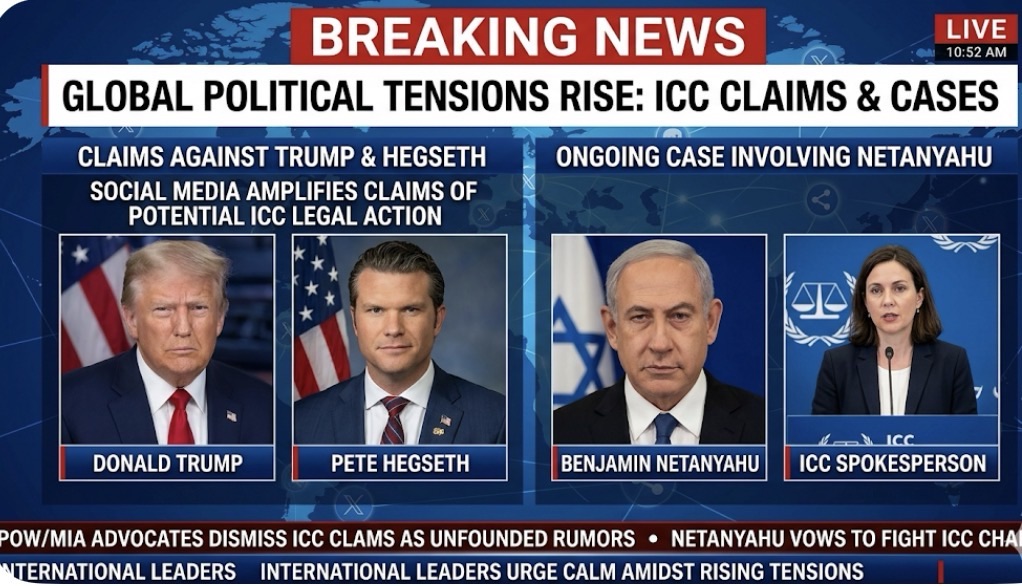
The claims have gained traction online, fueled by speculation and politically charged commentary, with some posts alleging that arrest warrants were issued after the individuals failed to respond to summonses. Experts in international law have quickly urged caution, noting that the ICC typically follows a transparent legal process, with formal announcements and documentation accompanying any major developments of this scale.
While the reports involving Trump and Hegseth remain unverified, the ICC has been firmly in the global spotlight due to its ongoing and widely reported case involving Benjamin Netanyahu. The court’s actions in that matter have intensified debates over accountability, sovereignty, and the limits of international justice, particularly among powerful nations that do not fully recognize the ICC’s jurisdiction.
The resurgence of these broader claims has complicated diplomatic conversations, especially as tensions linked to Iran and the wider Middle East remain high. Governments and political observers worry that misinformation could inflame public opinion, strain alliances, and distract from confirmed legal proceedings already underway.
Officials and fact-checking organizations have since moved to counter the viral narrative, emphasizing the importance of relying on credible sources and official statements. Many have pointed out that false or misleading claims involving international legal bodies can have serious consequences, including undermining trust in global institutions and escalating political divisions.
As the situation unfolds, attention remains focused on how digital platforms are shaping public perception of complex international issues. The episode underscores a growing challenge for policymakers and media organizations alike: navigating the intersection of real legal developments and the powerful, often unpredictable force of online information.
For now, the ICC has not issued any confirmed statements regarding alleged actions against Trump or Hegseth, leaving the viral claims unsubstantiated. Yet the controversy itself highlights the fragile balance between global justice, political narratives, and the speed at which information—accurate or otherwise—can influence the world stage.

Travis Kelce AND Taylor Swift ARE MARRIED! WEDDING CEREMONY CAPTIVATES FANS AND A-LISTERS ALIKE – Travis Kelce and Taylor Swift’s wedding is no longer a rumor. The couple officially tied the knot in a lavish ceremony that’s got the entire world talking!

Travis Kelce Caught Kissing Mystery Woman at His Bachelor Party at Bird Street — The Identity of the Woman Has Been Confirmed as Taylor’s Best…

A Surprise Homecoming: Jason and Travis Kelce have made a remarkable move that few expected. The NFL brothers recently purchased a modest house in Cleveland Heights, Ohio, close to where they were raised and first dreamed of football greatness. Rather than keeping it for themselves, they are turning the property into… see more.

BREAKING: Taylor Swift’s Divorced Parents, Andrea and Scott Swift, Remarry in a Private, Elegant Wedding — Travis Kelce Comforts Emotional Taylor as She Opens Up About the Pain She’s Carried Since Their Split… But Fans Are Left Stunned When She Announces What Many Have Suspected All Along: She’s Expecting… See More Photos

Stevie nicks and Tim McGraw set to perform at Taylor Swift and Travis Kelce’s wedding – which will be ‘bigger than the Met Gala’s. This is what we know 👇

Taylor Swift and Travis Kelce Reveal Plans for a Private Rehearsal Dinner Before Hosting an Epic 1,000-Guest Wedding Celebration

After weeks of speculation over Taylor Swift and Travis Kelce’s wedding plans, a permit has been filed for an event at Madison Square Garden over the July 4 weekend. Here’s what we know.

BREAKING: Serious Incident at the Mahomes Residence — Travis Kelce Faces Severe … After Deadly Dispute with Patrick Mahomes. Early this morning, police swarmed the home of football star Patrick Mahomes after a domestic dispute escalated into an unthinkable act of violence. Reports indicate that Travis Kelce has been confirmed…

OMG! TAYLOR IS MARRIED! You won’t believe the deeply emotional moment Taylor Swift walked down the aisle with her parents! The breathtaking custom dress, the bittersweet tears, and Travis waiting at the altar… it’s pure magic!

OMG! Travis Kelce and Taylor Swift Turn Heads at Met Gala 2026, Turning the Red Carpet into a Romantic Stage—but Fans Roast Their Outfits

New York Knicks Say They’ll be Declining White House Invitation from Donald Trump After NBA Championship Victory, Announce Massive Post-Parade Celebration Headlined by Taylor Swift
