
NFL
Iranian Military Commander Threatens to Halt All Trade in Persian Gulf, Sea of Oman, and Red Sea if US Blockade Continues

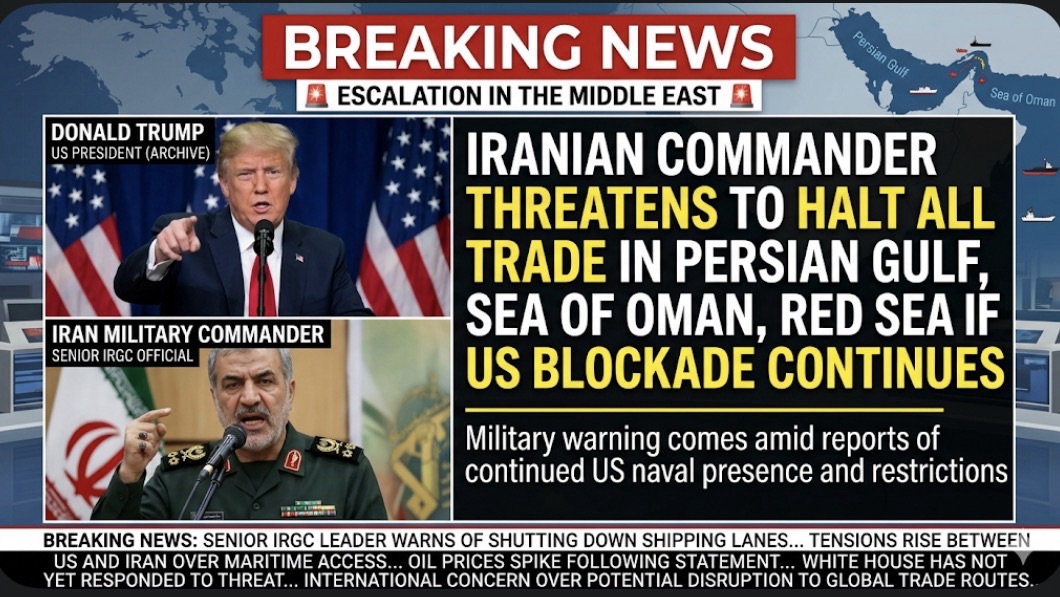
Tensions in the Middle East have escalated sharply after a senior Iranian military commander warned that Tehran could move to shut down vital global shipping lanes if a United States naval blockade continues. The warning signals a potentially dangerous turning point in an already fragile geopolitical standoff, with far-reaching implications for global trade and energy markets.
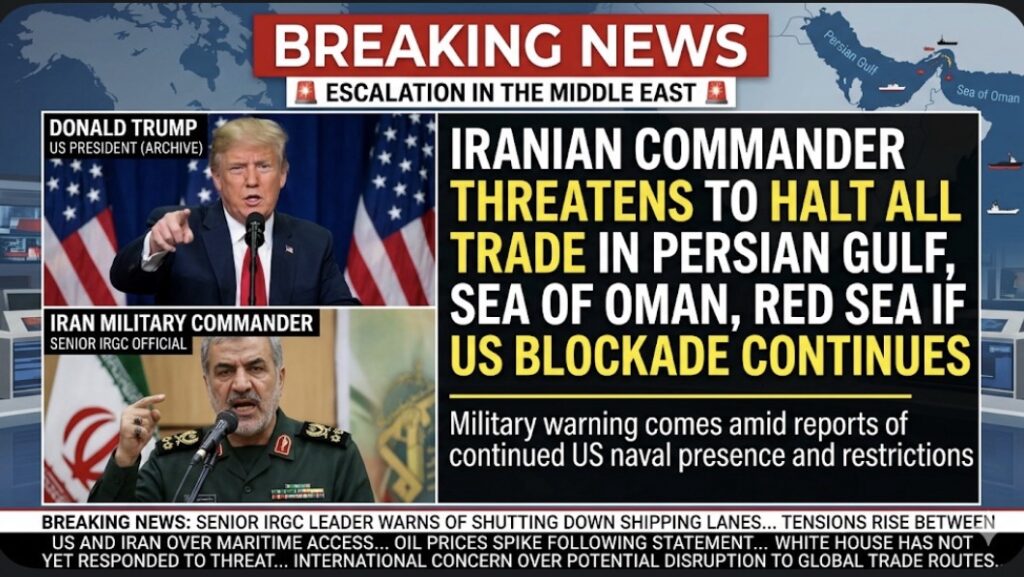
The commander’s remarks specifically referenced three critical waterways: the Persian Gulf, the Sea of Oman, and the Red Sea. Together, these routes serve as essential arteries for international shipping, particularly for oil and gas exports from the Gulf region to global markets. Any disruption in these areas could send shockwaves through the world economy.
The threat comes in response to increasing pressure from the United States, following heightened enforcement measures in and around the Strait of Hormuz —a narrow passage through which a significant percentage of the world’s oil supply flows. Iranian officials have characterized the US presence as an act of economic aggression, while Washington maintains that its actions are aimed at ensuring maritime security and preventing illicit activities.
Analysts warn that Iran’s ability to disrupt shipping—either through naval operations, missile deployments, or asymmetric tactics—poses a credible risk. The Iranian military has previously demonstrated its capacity to interfere with vessels in the region, including the seizure of tankers and harassment of foreign ships. However, a full-scale attempt to halt trade across multiple waterways would represent a dramatic escalation with unpredictable consequences.
The international community has reacted with concern. Major economies, particularly those dependent on Middle Eastern energy supplies, are closely monitoring the situation. Shipping companies and insurers are also reassessing risk levels, which could lead to increased costs and delays even without direct confrontation.
Meanwhile, diplomatic efforts appear to be struggling to keep pace with rising tensions. While some regional actors have called for restraint and renewed negotiations, the rhetoric from both sides suggests that a resolution remains distant. The situation is further complicated by broader regional dynamics, including ongoing conflicts and shifting alliances.
Experts caution that any closure or sustained disruption of these maritime routes could trigger a global economic ripple effect, including spikes in oil prices, supply chain disruptions, and heightened market volatility. As the standoff intensifies, the stakes continue to rise—not just for the countries directly involved, but for the global economy at large.
For now, the world watches closely as both sides navigate a perilous path between strategic posturing and open conflict.

Travis Kelce AND Taylor Swift ARE MARRIED! WEDDING CEREMONY CAPTIVATES FANS AND A-LISTERS ALIKE – Travis Kelce and Taylor Swift’s wedding is no longer a rumor. The couple officially tied the knot in a lavish ceremony that’s got the entire world talking!

Travis Kelce Caught Kissing Mystery Woman at His Bachelor Party at Bird Street — The Identity of the Woman Has Been Confirmed as Taylor’s Best…

A Surprise Homecoming: Jason and Travis Kelce have made a remarkable move that few expected. The NFL brothers recently purchased a modest house in Cleveland Heights, Ohio, close to where they were raised and first dreamed of football greatness. Rather than keeping it for themselves, they are turning the property into… see more.

BREAKING: Taylor Swift’s Divorced Parents, Andrea and Scott Swift, Remarry in a Private, Elegant Wedding — Travis Kelce Comforts Emotional Taylor as She Opens Up About the Pain She’s Carried Since Their Split… But Fans Are Left Stunned When She Announces What Many Have Suspected All Along: She’s Expecting… See More Photos

Stevie nicks and Tim McGraw set to perform at Taylor Swift and Travis Kelce’s wedding – which will be ‘bigger than the Met Gala’s. This is what we know 👇

Taylor Swift and Travis Kelce Reveal Plans for a Private Rehearsal Dinner Before Hosting an Epic 1,000-Guest Wedding Celebration

After weeks of speculation over Taylor Swift and Travis Kelce’s wedding plans, a permit has been filed for an event at Madison Square Garden over the July 4 weekend. Here’s what we know.

BREAKING: Serious Incident at the Mahomes Residence — Travis Kelce Faces Severe … After Deadly Dispute with Patrick Mahomes. Early this morning, police swarmed the home of football star Patrick Mahomes after a domestic dispute escalated into an unthinkable act of violence. Reports indicate that Travis Kelce has been confirmed…

OMG! TAYLOR IS MARRIED! You won’t believe the deeply emotional moment Taylor Swift walked down the aisle with her parents! The breathtaking custom dress, the bittersweet tears, and Travis waiting at the altar… it’s pure magic!

OMG! Travis Kelce and Taylor Swift Turn Heads at Met Gala 2026, Turning the Red Carpet into a Romantic Stage—but Fans Roast Their Outfits

New York Knicks Say They’ll be Declining White House Invitation from Donald Trump After NBA Championship Victory, Announce Massive Post-Parade Celebration Headlined by Taylor Swift
