
NFL
Donald Trump Announces Crackdown on China’s Iranian Oil Imports, as China Fires Back With Bold Challenge to U.S. Authority

A sharp escalation in rhetoric between Washington and Beijing has added new strain to already tense global relations, after Donald Trump declared that the United States is taking steps to block China’s imports of Iranian oil.
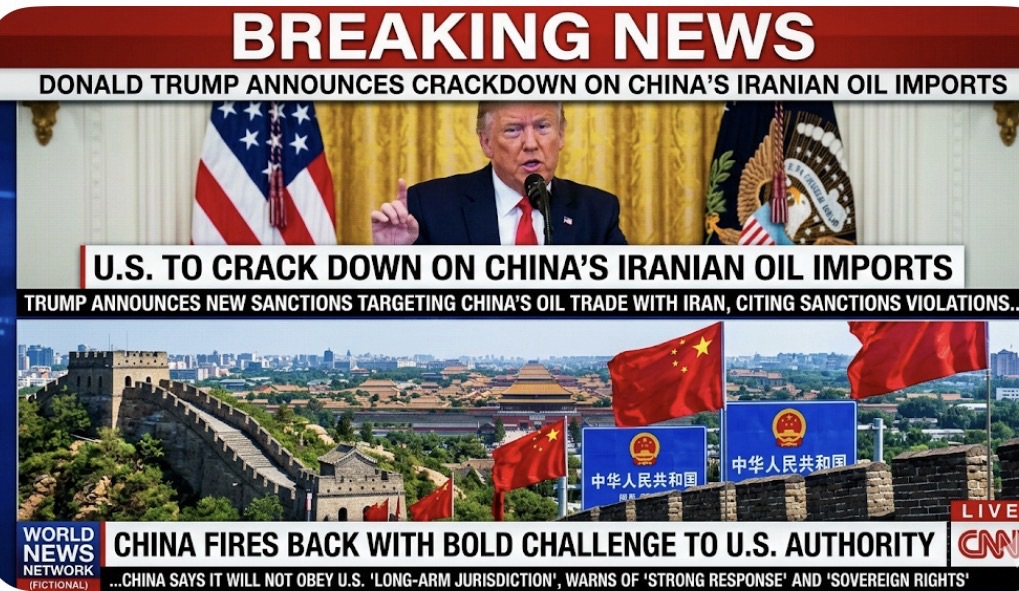
The statement, which underscores a renewed hardline posture toward both Tehran and Beijing, was met with an unusually direct response from China. Chinese officials pushed back firmly, signaling they would not be deterred by U.S. pressure and issuing a blunt challenge widely interpreted as a warning against interference in its energy supply chains.
At the center of the standoff is China’s continued purchase of crude from Iran, a trade that has long been a point of contention for Washington. U.S. policymakers have historically viewed such transactions as undermining sanctions and weakening efforts to isolate Tehran economically.
Trump’s remarks suggest a potential tightening of enforcement mechanisms aimed at restricting the flow of Iranian oil, possibly targeting shipping routes, financial channels, or third-party intermediaries involved in the trade. While specific measures have not been fully detailed, analysts say any aggressive enforcement could have ripple effects across global energy markets.
Beijing, however, appears unwilling to concede. Its response reflects a broader stance that energy security remains a sovereign matter, particularly as China continues to diversify its oil sources to sustain its vast industrial economy. By publicly challenging the U.S., China has signaled that it may resist not only diplomatically but also economically if restrictions intensify.
The exchange highlights the growing complexity of the triangular relationship between the United States, China, and Iran. For Iran, China represents a crucial economic lifeline, especially under continued Western pressure. For China, Iranian oil offers both strategic leverage and a relatively discounted supply.
Experts warn that further escalation could disrupt global oil flows, particularly in sensitive regions such as the Strait of Hormuz, a critical chokepoint for energy shipments. Any perceived threat to maritime routes could trigger volatility in oil prices and heighten geopolitical risk.
Despite the heated rhetoric, some observers believe backchannel diplomacy may still be underway, as all sides weigh the economic consequences of a prolonged standoff. For now, however, the tone from both Washington and Beijing suggests a deepening confrontation with no immediate resolution in sight.

Travis Kelce AND Taylor Swift ARE MARRIED! WEDDING CEREMONY CAPTIVATES FANS AND A-LISTERS ALIKE – Travis Kelce and Taylor Swift’s wedding is no longer a rumor. The couple officially tied the knot in a lavish ceremony that’s got the entire world talking!

Travis Kelce Caught Kissing Mystery Woman at His Bachelor Party at Bird Street — The Identity of the Woman Has Been Confirmed as Taylor’s Best…

A Surprise Homecoming: Jason and Travis Kelce have made a remarkable move that few expected. The NFL brothers recently purchased a modest house in Cleveland Heights, Ohio, close to where they were raised and first dreamed of football greatness. Rather than keeping it for themselves, they are turning the property into… see more.

BREAKING: Taylor Swift’s Divorced Parents, Andrea and Scott Swift, Remarry in a Private, Elegant Wedding — Travis Kelce Comforts Emotional Taylor as She Opens Up About the Pain She’s Carried Since Their Split… But Fans Are Left Stunned When She Announces What Many Have Suspected All Along: She’s Expecting… See More Photos

Stevie nicks and Tim McGraw set to perform at Taylor Swift and Travis Kelce’s wedding – which will be ‘bigger than the Met Gala’s. This is what we know 👇

Taylor Swift and Travis Kelce Reveal Plans for a Private Rehearsal Dinner Before Hosting an Epic 1,000-Guest Wedding Celebration

After weeks of speculation over Taylor Swift and Travis Kelce’s wedding plans, a permit has been filed for an event at Madison Square Garden over the July 4 weekend. Here’s what we know.

BREAKING: Serious Incident at the Mahomes Residence — Travis Kelce Faces Severe … After Deadly Dispute with Patrick Mahomes. Early this morning, police swarmed the home of football star Patrick Mahomes after a domestic dispute escalated into an unthinkable act of violence. Reports indicate that Travis Kelce has been confirmed…

OMG! TAYLOR IS MARRIED! You won’t believe the deeply emotional moment Taylor Swift walked down the aisle with her parents! The breathtaking custom dress, the bittersweet tears, and Travis waiting at the altar… it’s pure magic!

OMG! Travis Kelce and Taylor Swift Turn Heads at Met Gala 2026, Turning the Red Carpet into a Romantic Stage—but Fans Roast Their Outfits

New York Knicks Say They’ll be Declining White House Invitation from Donald Trump After NBA Championship Victory, Announce Massive Post-Parade Celebration Headlined by Taylor Swift
