
NFL
Critics Demand Immediate Clarification After Donald Trump Appears to Propose Joint Economic Control of the Strait of Hormuz Amid Ongoing Military Tensions

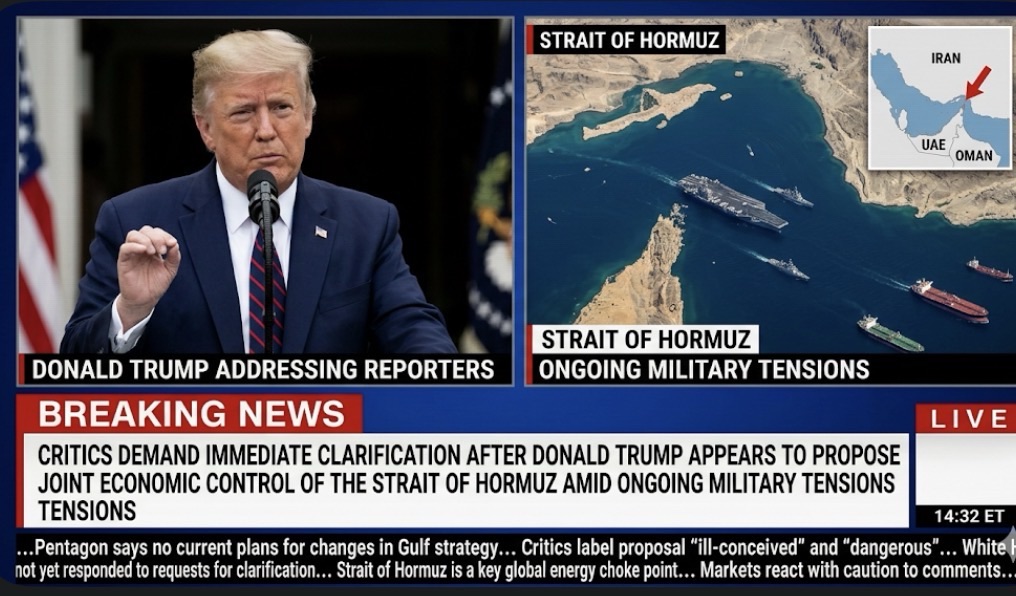
Critics across the political spectrum are demanding urgent clarification after Donald Trump appeared to suggest the possibility of a joint economic arrangement with Iran over the strategically vital Strait of Hormuz, even as military tensions between the two nations remain high.
The controversy erupted following remarks made during an exchange with Jonathan Karl, in which Trump floated the idea of a “joint venture” involving shipping access through the narrow waterway. The Strait of Hormuz is one of the world’s most critical oil transit chokepoints, through which a significant portion of global energy supplies passes daily. For months, the administration has framed its actions in the region as necessary to protect freedom of navigation and safeguard international commerce.
Trump’s suggestion of potential economic cooperation with Iran—particularly involving tolls or shared control—has triggered immediate backlash from lawmakers, foreign policy experts, and analysts. Critics argue that the remarks appear to contradict the administration’s stated rationale for escalating military operations in the region.
“This raises serious questions about strategic consistency and intent,” one senior policy analyst noted. “You cannot justify military engagement on security grounds while simultaneously discussing economic partnerships with the same adversary in the same theater.”
Members of Congress from both parties have called for a formal explanation, with some urging hearings to determine whether any discussions or proposals regarding joint economic control have taken place behind closed doors. Concerns are also being raised about potential ethical implications and whether the comments reflect a broader, undisclosed policy direction.
Supporters of the president, however, have sought to downplay the remarks, suggesting they may reflect a broader negotiating posture aimed at stabilizing the region through unconventional diplomacy. Some argue that economic cooperation, even with adversaries, could serve as a pathway to de-escalation if pursued carefully.
Still, the timing of the comments has intensified scrutiny. The United States has recently undertaken military actions targeting Iranian-linked positions, with officials repeatedly emphasizing the need to counter threats to maritime security. Against this backdrop, the notion of entering into a business-like arrangement with Iran has struck many observers as contradictory.
International reaction has also begun to surface, with regional stakeholders closely monitoring the situation. Any shift toward shared economic control of the Strait would have far-reaching implications, not only for U.S.–Iran relations but also for global energy markets and maritime law.
As pressure mounts, the White House has yet to provide a detailed clarification of the president’s remarks. Whether the comments signal a strategic pivot, an off-the-cuff statement, or a deeper policy under consideration remains unclear. For now, the episode has injected fresh uncertainty into an already volatile geopolitical landscape, with calls for transparency growing louder by the hour.

Travis Kelce AND Taylor Swift ARE MARRIED! WEDDING CEREMONY CAPTIVATES FANS AND A-LISTERS ALIKE – Travis Kelce and Taylor Swift’s wedding is no longer a rumor. The couple officially tied the knot in a lavish ceremony that’s got the entire world talking!

Travis Kelce Caught Kissing Mystery Woman at His Bachelor Party at Bird Street — The Identity of the Woman Has Been Confirmed as Taylor’s Best…

A Surprise Homecoming: Jason and Travis Kelce have made a remarkable move that few expected. The NFL brothers recently purchased a modest house in Cleveland Heights, Ohio, close to where they were raised and first dreamed of football greatness. Rather than keeping it for themselves, they are turning the property into… see more.

BREAKING: Taylor Swift’s Divorced Parents, Andrea and Scott Swift, Remarry in a Private, Elegant Wedding — Travis Kelce Comforts Emotional Taylor as She Opens Up About the Pain She’s Carried Since Their Split… But Fans Are Left Stunned When She Announces What Many Have Suspected All Along: She’s Expecting… See More Photos

Stevie nicks and Tim McGraw set to perform at Taylor Swift and Travis Kelce’s wedding – which will be ‘bigger than the Met Gala’s. This is what we know 👇

Taylor Swift and Travis Kelce Reveal Plans for a Private Rehearsal Dinner Before Hosting an Epic 1,000-Guest Wedding Celebration

After weeks of speculation over Taylor Swift and Travis Kelce’s wedding plans, a permit has been filed for an event at Madison Square Garden over the July 4 weekend. Here’s what we know.

BREAKING: Serious Incident at the Mahomes Residence — Travis Kelce Faces Severe … After Deadly Dispute with Patrick Mahomes. Early this morning, police swarmed the home of football star Patrick Mahomes after a domestic dispute escalated into an unthinkable act of violence. Reports indicate that Travis Kelce has been confirmed…

OMG! TAYLOR IS MARRIED! You won’t believe the deeply emotional moment Taylor Swift walked down the aisle with her parents! The breathtaking custom dress, the bittersweet tears, and Travis waiting at the altar… it’s pure magic!

OMG! Travis Kelce and Taylor Swift Turn Heads at Met Gala 2026, Turning the Red Carpet into a Romantic Stage—but Fans Roast Their Outfits

New York Knicks Say They’ll be Declining White House Invitation from Donald Trump After NBA Championship Victory, Announce Massive Post-Parade Celebration Headlined by Taylor Swift
