
NFL
US Military Moves to Enforce Blockade on Iranian Shipping in the Strait of Hormuz After Donald Trump Orders Immediate Action

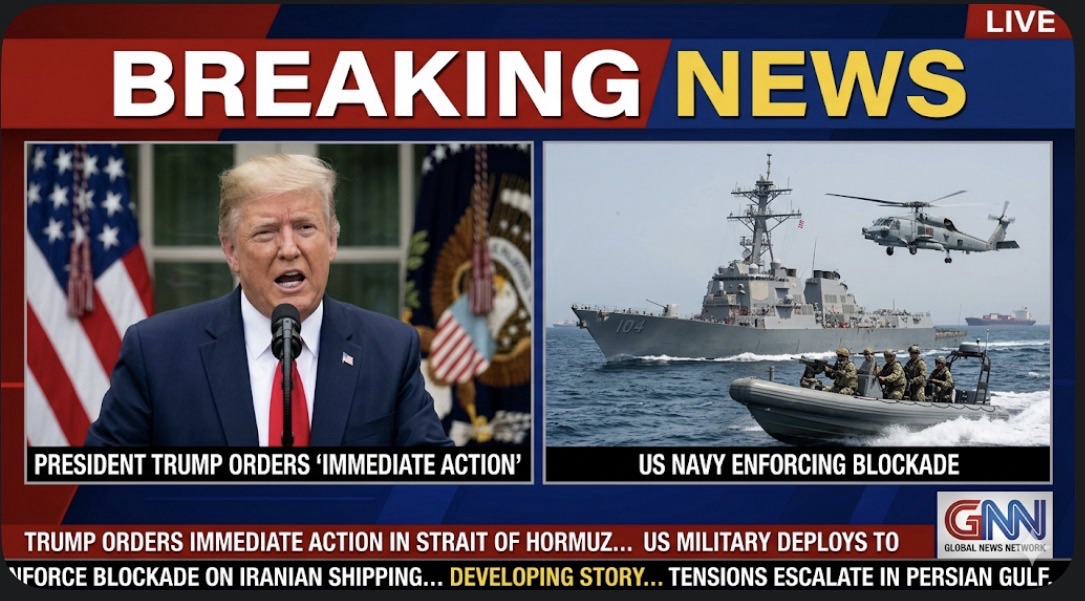
The United States military is moving forward with plans to enforce a naval blockade targeting Iranian-linked shipping in the strategically vital Strait of Hormuz, following a direct order from President Donald Trump. The decision marks a sharp escalation in tensions after high-stakes diplomatic talks between Washington and Tehran collapsed without agreement.

According to U.S. Central Command (CENTCOM), the blockade is set to begin immediately, focusing on maritime traffic entering and exiting Iranian ports. The move comes after Trump publicly declared that the U.S. Navy would begin “blockading any and all ships” attempting to pass through the critical waterway, signaling a decisive shift from diplomacy to military pressure.
The Strait of Hormuz remains one of the world’s most important النفط chokepoints, responsible for transporting roughly a fifth of global oil supplies. Any disruption to shipping in the region carries significant consequences for global energy markets—and early signs of impact are already emerging. Oil prices have surged past $100 per barrel amid fears of supply disruptions, while several tankers have reportedly altered routes or avoided the area altogether ahead of enforcement.
U.S. officials have clarified that the blockade will specifically target vessels linked to Iranian trade, rather than completely shutting down the strait. Ships traveling to non-Iranian destinations are expected to retain freedom of navigation, though the presence of U.S. naval forces is likely to heighten scrutiny and risk for all commercial traffic in the المنطقة.
The decision follows the breakdown of prolonged negotiations in Islamabad, where both sides failed to reach consensus on key issues, including Iran’s nuclear program and regional security concerns. Trump has framed the blockade as a necessary step to counter what he described as Iranian attempts to control or tax passage through the strait, vowing strong enforcement and warning of further action if U.S. forces are challenged.
Meanwhile, Iran has issued stern warnings in response, signaling that any interference with its maritime activity could be treated as a hostile act. The growing standoff raises the risk of direct confrontation in one of the most heavily militarized waterways in the world.
As U.S. naval assets position themselves to implement the blockade, global attention is fixed on the Strait of Hormuz—where the intersection of military power, energy security, and geopolitical rivalry could shape the next phase of the crisis.

Donald Trump Highlights Growing Strategic Ties as Indonesia Considers Landmark Agreement to Grant U.S. Military Aircraft Airspace Access Amid Escalating U.S.–Iran Conflict Over Strait of Hormuz

Donald Trump Launches Scathing Attack on Pope Leo XIV, Accusing Him of Weak Leadership on War and Failure to Address Rising Global Crime

Donald Trump’s Expectations from Britain Collapse as Keir Starmer Makes Clear Decision to Avoid Strait of Hormuz Military Escalation

Iran–Russia War Coalition Shakes Global Order as Leaders Move to Challenge Trump’s Strait of Hormuz Strategy

US Military Moves to Enforce Blockade on Iranian Shipping in the Strait of Hormuz After Donald Trump Orders Immediate Action

WWE Icon and Hollywood Superstar Dwayne Johnson Passes Away

Surprise Wedding Moment Planned by Travis Kelce and Taylor Swift’s Closest Friends Sparks Buzz

Former United States President Barack Obama Passes Away

Taylor Swift and Travis Kelce Secret Wedding Plans Stir Massive Buzz Across Entertainment and Sports Circles

WWE Icon and Hollywood Superstar Dwayne Johnson Passes Away
Taylor Swift and Travis Kelce Wedding Speculation Heats Up as Alleged Details of Date and Venue Emerge
