
NFL
Trump Administration Considers Closing US Military Bases in Spain or Germany and Repositioning Troops to More Cooperative NATO Allies Like Poland, Romania, Lithuania, and Greece Over Limited Support During the Recent Iran War

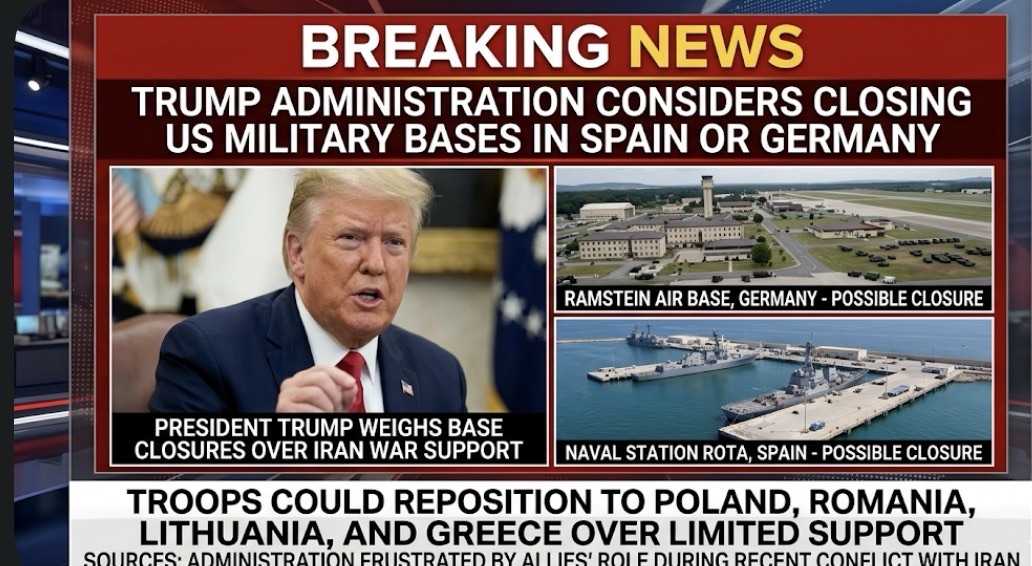
The administration of Donald Trump is weighing a significant restructuring of U.S. military deployments in Europe, including the possible closure of bases in Germany and Spain, as part of a broader response to allied positions during the recent Iran war.
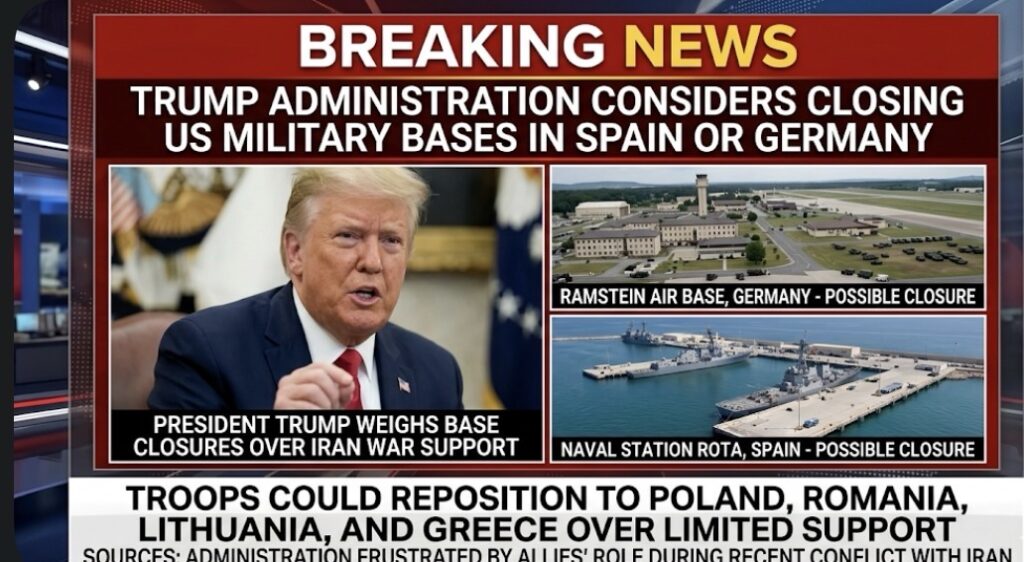
According to officials familiar with internal discussions, the proposal centers on relocating American troops from Western European countries that were seen as offering limited operational support during the conflict. In their place, the administration is considering expanding its military footprint in Eastern European nations such as Poland, Romania, Lithuania, and Greece.
The potential shift comes amid rising tensions within NATO, as divisions deepen over Europe’s response to the Iran conflict. Several Western European allies, including Germany and Spain, reportedly imposed restrictions on the use of their airspace and military facilities during U.S. operations, drawing frustration from Washington.
Administration officials view the proposed troop realignment as a way to prioritize partnerships with countries that have demonstrated stronger military and political alignment with U.S. objectives. Eastern European nations, many of which have consistently called for a greater American presence, are seen as more reliable partners in the current security environment.
Supporters of the plan argue that repositioning forces closer to NATO’s eastern flank would enhance deterrence capabilities and better reflect shifting geopolitical priorities. However, critics warn that reducing the U.S. presence in long-standing hubs like Germany could undermine logistical networks and strain transatlantic cooperation.
European leaders have expressed concern over the potential move, emphasizing the importance of unity within NATO and cautioning against decisions that could deepen internal divisions. Some officials have also noted that disagreements during the Iran conflict stemmed from a lack of coordination rather than unwillingness to support alliance efforts.
The proposal remains under review and has not been formally approved. Any large-scale troop movement or base closure would likely require extensive planning, coordination with allied governments, and consultation with the U.S. Congress.
If implemented, the plan would mark a notable shift in U.S. defense strategy in Europe, with long-term implications for NATO’s structure and the balance of military power across the continent.

Trump Urges NATO Allies to Quickly Submit Concrete Plans for Securing Safe Navigation Through the Strait of Hormuz Following Fragile Ceasefire with Iran

UK Prime Minister Keir Starmer Calls on Donald Trump to Ensure Full and Credible Ceasefire Implementation, Warning That Ongoing Violence in Lebanon Could Undermine Fragile Regional Truce

Trump Administration Considers Closing US Military Bases in Spain or Germany and Repositioning Troops to More Cooperative NATO Allies Like Poland, Romania, Lithuania, and Greece Over Limited Support During the Recent Iran War

International Alarm Grows as Iran Rejects Ceasefire Within 24 Hours, Reopening the Possibility of Conflict Centered on the Strait of Hormuz

Critics Demand Immediate Clarification After Donald Trump Appears to Propose Joint Economic Control of the Strait of Hormuz Amid Ongoing Military Tensions

U.S. Lawmakers Demand Investigation Into Donald Trump’s Finances After Controversial Defense Stock Investment Allegations Linked to Iran War Surface

Russia’s President Vladimir Putin Issues Blunt Warning to Iran, Urging Leaders Not to Trust the United States or Donald Trump Despite Newly Announced Ceasefire Agreement

Iran Agrees to Immediate and Safe Reopening of the Vital Strait of Hormuz in Exchange for Two-Week US Strike Suspension—Trump’s Pressure Delivers Short-Term Relief, But Skeptics Warn It’s Merely a Tactical Pause, Not Defeat for Washington

In a Dramatic Diplomatic Development, Donald Trump Engages Kim Jong Un in a Secret Direct Call While Global Attention Fixes on the Strait of Hormuz Crisis and Fears of Escalation Grow

Donald Trump Reportedly Activates “Doomsday Plane” as U.S. Raises Nuclear Command Readiness Amid Intensifying Standoff With Iran

Trump Declares “Complete and Total Regime Change” in Iran as 47-Year Islamic Republic Faces Collapse Tonight
