
NFL
Historic Moment at the Nation’s Highest Court: President Trump Arrives by Limousine, Takes Front-Row Seat for Arguments on His Birthright Citizenship Order, and Exits Before Opposing Arguments Conclude

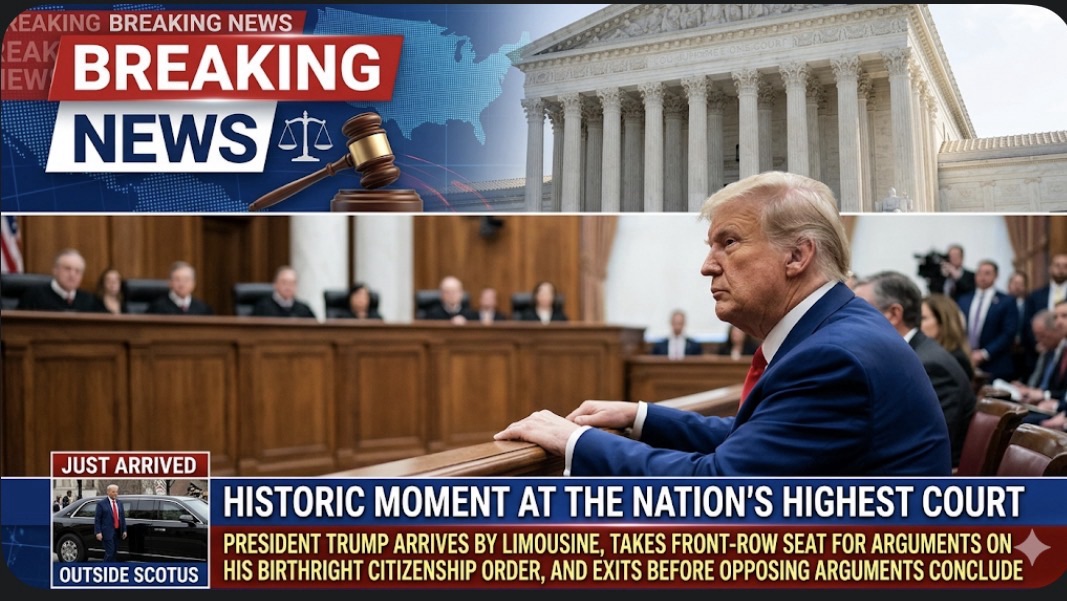
A moment of rare symbolism unfolded at the nation’s highest court as Donald Trump made an extraordinary appearance during arguments over his controversial birthright citizenship order at the Supreme Court of the United States.
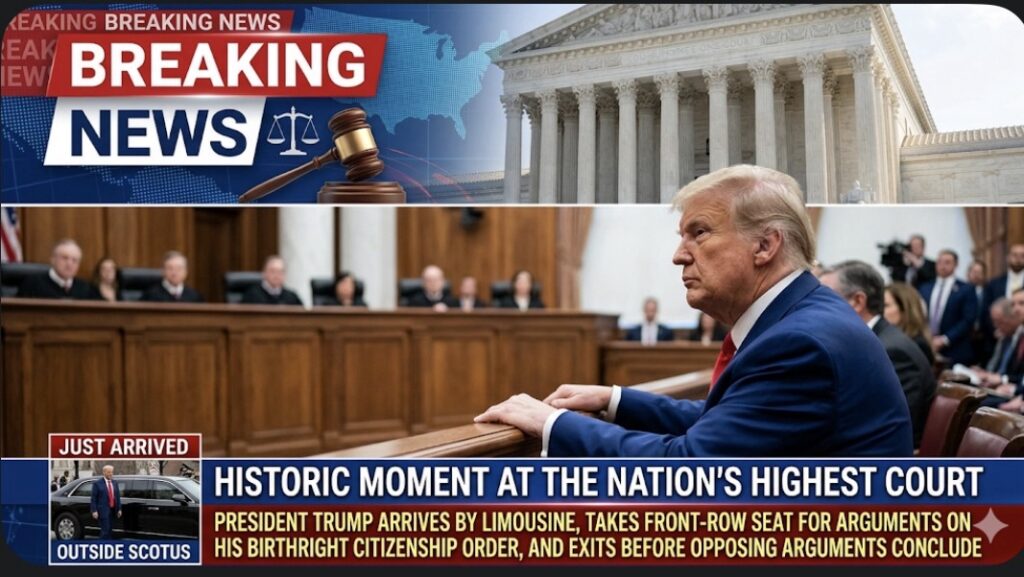
Arriving in a presidential-style limousine, Trump drew immediate attention from onlookers, legal observers, and members of the press gathered outside the court. His presence marked an unusual break from tradition, as sitting or former presidents rarely attend oral arguments—especially in cases directly tied to their own policies.
Inside the courtroom, Trump took a front-row seat as government attorneys presented arguments defending the executive order. The policy in question seeks to reinterpret the constitutional guarantee of birthright citizenship, a principle that has for over a century granted automatic citizenship to nearly all individuals born on U.S. soil. Supporters of the order argue that the amendment has been misapplied and that the executive branch has authority to clarify its scope. Opponents, however, contend that the order directly contradicts established constitutional law and decades of judicial precedent.
Observers noted that Trump appeared attentive during the initial arguments, occasionally conferring with aides seated nearby. His attendance added a layer of political intensity to what is typically a strictly legal proceeding, with some analysts suggesting it was intended to signal the importance of the case to his broader policy agenda.
In a move that drew as much attention as his arrival, Trump departed the courtroom before attorneys opposing the order had completed their arguments. The early exit sparked immediate commentary from legal experts and political figures, with critics questioning the optics of leaving before hearing both sides in a case of such national significance. Supporters, however, dismissed the criticism, describing the appearance itself as a strong statement of engagement with the judicial process.
The case represents a pivotal test of executive authority and constitutional interpretation. At its core is whether the president can unilaterally redefine the scope of birthright citizenship, or whether such a change would require a constitutional amendment or congressional action.
As the Supreme Court of the United States deliberates, the outcome could have far-reaching implications—not only for immigration policy but for the balance of powers within the U.S. government. Regardless of the final ruling, Trump’s highly visible presence has already ensured that this case will be remembered as a historic intersection of law, politics, and presidential influence.

Trump Declares “Time Is Up” for Pam Bondi as Attorney General Moves to Release Iranian-Hacked Jeffrey Epstein Files Previously Blocked From Public Circulation, Raising Questions About Power Struggles and Political Retaliation

Taylor Swift Spotted Stepping Out in New York City With Kylie Kelce and Jason Kelce, Sparking Rumors as Travis Kelce Is Noticeably Absent From the Outing

Taylor Swift Spotted Stepping Out in New York City With Kylie Kelce and Jason Kelce, Sparking Rumors as Travis Kelce Is Noticeably Absent From the Outing

From “War Is Over” to Mobilization: Trump Orders Immediate Deployment of Ground Troops and Signals New Strikes Against Iran, Leaving Global Leaders Questioning U.S. Strategy

Supreme Court Tensions Boil Over as Trump Targets Justice Jackson With Impeachment Call Following “Bizarre Tangent” Controversy

U.S. Lawmakers Call for Sweeping Investigation Into Donald Trump’s Financial Records Amid Allegations of Attempted Defense Stock Investments Before Iran War Broke Out

Trump Addresses Nation on Ongoing Iran War: Claims Strategic Objectives Nearly Met, Announces Intensified Military Action for Next Two to Three Weeks Despite No Firm End Date

War Will Continue Until Permanent Humiliation and Surrender of the US and Israel, Declares Iran’s Central Military Headquarters in Direct Rebuttal to Trump’s Claims of Destroyed Iranian Forces

President Trump: U.S. Will Launch Extremely Strong Strikes on Iranian Power Plants and Targets in Next 2-3 Weeks, Bringing the Country Back to the Stone Age Where It Belongs

Historic Moment at the Nation’s Highest Court: President Trump Arrives by Limousine, Takes Front-Row Seat for Arguments on His Birthright Citizenship Order, and Exits Before Opposing Arguments Conclude

“No Need for Assassination,” Iranian Officials Declare, Arguing Trump’s Leadership Is Already Accelerating America’s Decline From Within and Undermining Its Global Power
