
NFL
From “War Is Over” to Mobilization: Trump Orders Immediate Deployment of Ground Troops and Signals New Strikes Against Iran, Leaving Global Leaders Questioning U.S. Strategy

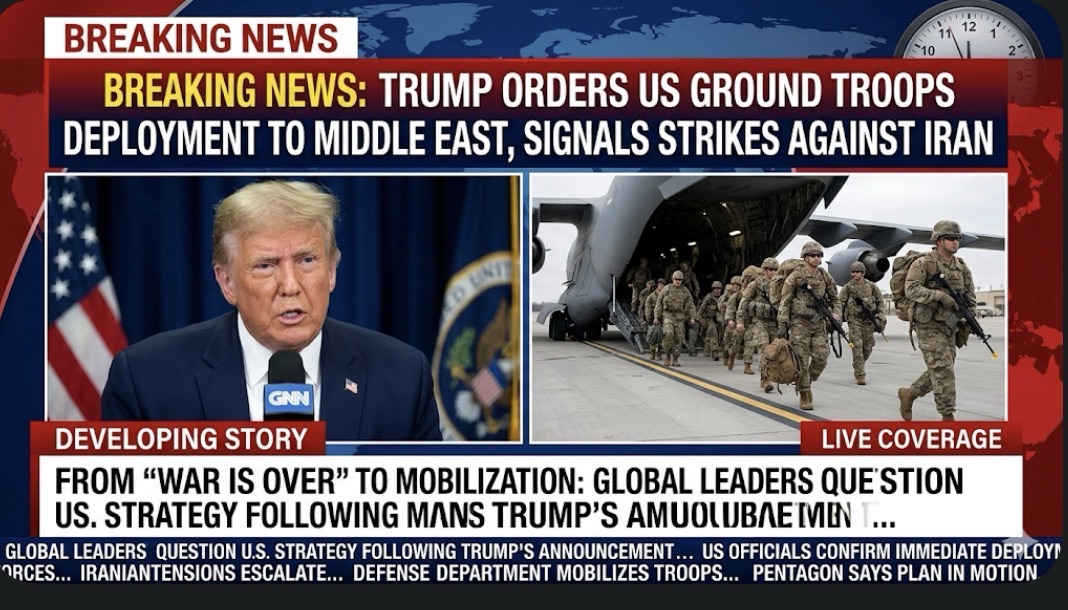
In a dramatic escalation of the ongoing conflict between the United States and Iran, President Donald Trump has ordered the immediate deployment of U.S. ground forces to the Middle East and signaled further military strikes against Iranian targets, marking a major shift in U.S. strategy and raising alarm among world leaders about widening war risks.
In his first prime-time address since launching military operations against Iran more than a month ago, Trump declared that the United States had “nearly achieved” its immediate objectives in the conflict, including degrading Iran’s military, but made clear that more operations were imminent. He warned that U.S. forces would “hit Iran extremely hard” in the coming weeks if diplomacy fails, and indicated that further strikes could target strategic infrastructure. Simultaneously, the Pentagon has ordered thousands of American troops, including elements of the 82nd Airborne Division, to deploy to the Middle East, signaling a major escalation beyond air and naval strikes. While a full-scale invasion has not been formally announced, the massing of troops has fueled speculation of potential ground operations inside Iran.
The Trump administration framed the stepped-up deployment as part of a broader pressure campaign, aimed at breaking the blockade of the Strait of Hormuz — a key global oil route that Iran has intermittently disrupted — and seizing or neutralizing critical military and energy infrastructure, including Kharg Island, Iran’s major oil export hub. Administration officials argue that these moves are designed to degrade Iran’s capacity to threaten U.S. forces and allies in the region. Yet lawmakers on Capitol Hill are deeply divided. Some Republican allies have signaled support for a tougher stance, while many Democrats warn that deploying U.S. ground troops risks a protracted war and requires congressional oversight. Public opinion is largely skeptical, with a recent poll showing most Americans oppose sending ground forces into Iran.
Tehran’s leadership responded with defiance. Iran’s armed forces have announced preparations for potential U.S. ground incursions and warned that any attempt to place U.S. troops on Iranian soil would be met with fierce resistance. Iranian officials also denounced the war as illegitimate and pledged continued missile and drone attacks across the region, including strikes affecting U.S. facilities and allies.
Global reactions have been swift. Several European capitals expressed concern, urging de-escalation and emphasizing diplomatic channels while warning that the conflict threatens global energy stability and could undermine alliances. In the Middle East, nations dependent on Gulf oil are navigating a delicate balance between supporting stability and avoiding entanglement. Major economies in Asia, heavily reliant on Middle Eastern oil, have called for restraint to reduce supply disruptions. Markets reacted immediately, with oil prices surging amid fears of prolonged instability in the Gulf.
Despite Trump’s claims that military objectives are near completion, critics argue that American strategy lacks a clear endgame. Editorials have described the approach as vague, with the potential to draw the United States into a lengthy and costly conflict. Defense analysts caution that partial ground deployment could escalate the war into a new stage, inflaming regional tensions and complicating relations with allies uneasy about the escalation.
The unfolding U.S. strategy, combining ground troop deployment with sustained aerial and naval strikes, represents a significant shift in American foreign policy under President Trump. While he portrays it as a necessary push to achieve rapid strategic results, critics warn it could entangle the United States in a broader, more unpredictable Middle East conflict. Global leaders are questioning whether diplomacy has been sidelined in favor of military action, leaving the world on edge as the situation evolves.

Trump Declares “Time Is Up” for Pam Bondi as Attorney General Moves to Release Iranian-Hacked Jeffrey Epstein Files Previously Blocked From Public Circulation, Raising Questions About Power Struggles and Political Retaliation

Taylor Swift Spotted Stepping Out in New York City With Kylie Kelce and Jason Kelce, Sparking Rumors as Travis Kelce Is Noticeably Absent From the Outing

Taylor Swift Spotted Stepping Out in New York City With Kylie Kelce and Jason Kelce, Sparking Rumors as Travis Kelce Is Noticeably Absent From the Outing

From “War Is Over” to Mobilization: Trump Orders Immediate Deployment of Ground Troops and Signals New Strikes Against Iran, Leaving Global Leaders Questioning U.S. Strategy

Supreme Court Tensions Boil Over as Trump Targets Justice Jackson With Impeachment Call Following “Bizarre Tangent” Controversy

U.S. Lawmakers Call for Sweeping Investigation Into Donald Trump’s Financial Records Amid Allegations of Attempted Defense Stock Investments Before Iran War Broke Out

Trump Addresses Nation on Ongoing Iran War: Claims Strategic Objectives Nearly Met, Announces Intensified Military Action for Next Two to Three Weeks Despite No Firm End Date

War Will Continue Until Permanent Humiliation and Surrender of the US and Israel, Declares Iran’s Central Military Headquarters in Direct Rebuttal to Trump’s Claims of Destroyed Iranian Forces

President Trump: U.S. Will Launch Extremely Strong Strikes on Iranian Power Plants and Targets in Next 2-3 Weeks, Bringing the Country Back to the Stone Age Where It Belongs

Historic Moment at the Nation’s Highest Court: President Trump Arrives by Limousine, Takes Front-Row Seat for Arguments on His Birthright Citizenship Order, and Exits Before Opposing Arguments Conclude

“No Need for Assassination,” Iranian Officials Declare, Arguing Trump’s Leadership Is Already Accelerating America’s Decline From Within and Undermining Its Global Power
