
NFL
Iranian President Masoud Pezeshkian Signals Openness to Negotiations Amid Strained Ceasefire but Firmly Rejects Any Attempt by the US or Israel to Impose Surrender or Forced Terms on Tehran

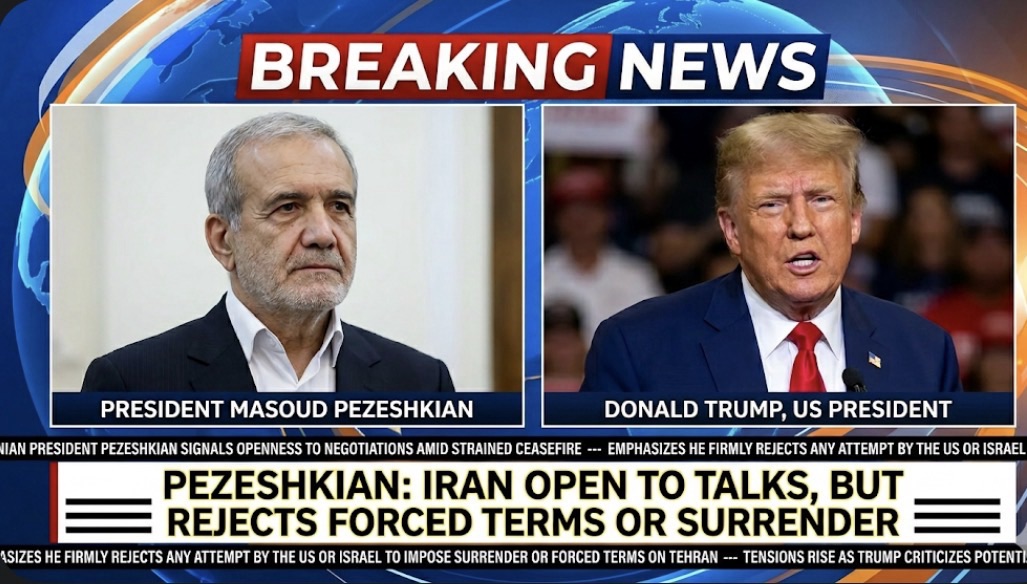
Iranian President Masoud Pezeshkian has signaled a willingness to reopen negotiations with the United States, even as tensions continue to strain a fragile ceasefire involving Iran, United States, and Isreal.
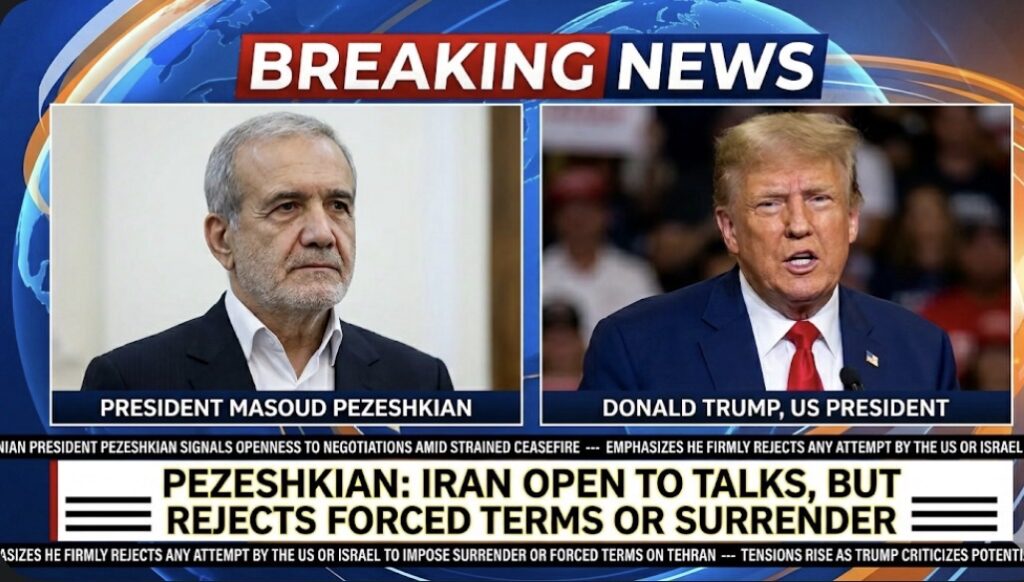
Speaking amid growing uncertainty in the region, Pezeshkian emphasized that Tehran remains open to dialogue but will not accept what he described as imposed terms or demands amounting to surrender. His remarks come as international mediators push to extend the current ceasefire, which has been repeatedly tested by ongoing military activity and rising mistrust between the parties.
Iran’s position underscores a balancing act between diplomacy and resistance. While officials in Tehran have indicated that negotiations could help ease tensions and potentially address long-standing disputes, they have also warned that continued military pressure—particularly from Israel and U.S. strategic moves in the region—could undermine any progress at the negotiating table.
The ceasefire itself remains under significant strain. Accusations of violations and continued hostilities in key areas have fueled concerns that the truce could collapse if diplomatic efforts fail to gain traction. At the same time, developments in critical waterways such as the Strait of Hormuz have heightened global attention, given their importance to international energy supplies and trade routes.
Key issues expected to dominate any renewed talks include Iran’s nuclear program, economic sanctions imposed by the United States, and broader regional security concerns. These longstanding points of contention have historically complicated efforts to reach a durable agreement.
Despite the challenges, Pezeshkian’s comments suggest that Tehran sees value in keeping diplomatic channels open, provided negotiations are conducted on what it considers equal footing. Whether that approach can translate into meaningful progress remains uncertain, as both sides continue to navigate a complex and volatile geopolitical landscape.

Donald Trump Escorted From White House Correspondents’ Dinner After Shooting as FBI Examines Last-Minute 5 BTC Transaction Linked to Suspect
Tehran Officially States China Is Destined to Replace America as the Dominant Global Power, Citing Shifting International Alliances
President Trump Rejects Quick Iran Agreement, Doubles Down on Blockade That Denies Regime Money and Weakens Its Economy

President Trump Declares US Will Take Over Cuba Almost Immediately After Completing Military Operations in Iran: ‘We’ll Finish One First, I Like to Finish a Job’

Tehran Sends Fresh Peace Offer to Washington Through Pakistan Amid Fragile Ceasefire – Insiders Warn This Could Be the Last Chance to Avoid Escalation in the 2026 Iran Conflict

Trump Announces Review of Possible U.S. Troop Reductions in Germany While Threatening Withdrawals from Italy and Spain Over Allies’ Refusal to Support American Military Operations Against Iran

As Trump Rejects Iran’s Proposal to Reopen the Strait of Hormuz and Prioritize Nuclear Talks Later, Parliament Deputy Speaker Warns Washington Must Yield to Tehran’s Terms or Confront Nationwide Resistance and Potential Unprecedented Retaliatory Actions

Diplomatic Standoff Intensifies: US Dismisses Iran’s Recent Peace Initiative While Iranian Officials Insist They Require No External Talks to Determine Their Path Forward

Trump Administration Expresses Dissatisfaction with Iran’s Latest Proposal to Reopen the Strait of Hormuz Without Immediate Concessions on Its Nuclear Program, Signaling Potential for Extended Naval Blockade

Trump Administration Remains Skeptical of Iran’s Latest Peace Proposal That Seeks to Reopen the Strait of Hormuz and End the War Without Addressing the Nuclear Program Upfront

China Delivers Strong Rejection to US Threats of 100% Tariffs, Vowing to Continue Iranian Oil Imports Despite American Pressure on Beijing’s Energy Security
