
NFL
U.S. Navy Warships Successfully Reenter Strait of Hormuz for the First Time Since Recent Conflict, Launching Critical Operation to Clear Iranian Sea Mines

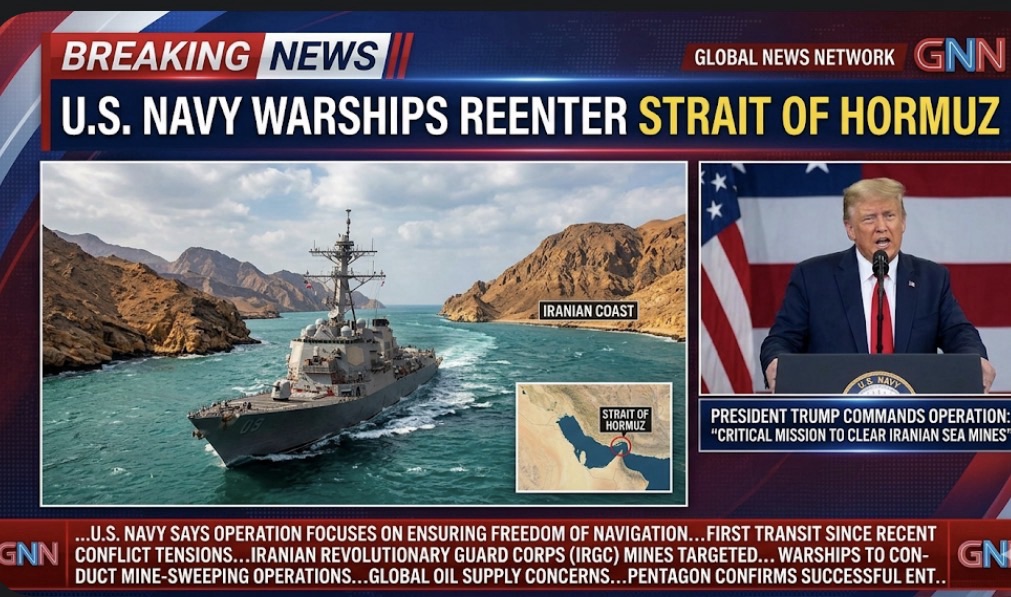
U.S. Navy warships have successfully reentered the strategically vital Strait of Hormuz for the first time since the recent conflict with Iran, marking a significant shift from active hostilities toward stabilization and recovery efforts in the region.
The naval transit signals the beginning of a carefully coordinated operation aimed at clearing sea mines believed to have been deployed by Iran’s Islamic Revolutionary Guard Corps (IRGC) during the height of the confrontation. The presence of these mines has posed a major threat to commercial shipping and global energy flows, as the narrow waterway serves as one of the world’s most critical النفط transit routes.
According to U.S. defense officials, the initial passage of the warships was designed to “set conditions” for a broader and more complex mine-clearing mission. Specialized units, including explosive ordnance disposal teams and unmanned underwater vehicles, are expected to follow in order to locate and neutralize the hazards scattered across key shipping lanes.
The Strait of Hormuz handles a significant portion of the world’s oil exports, making its security a top priority for global markets. In recent weeks, the disruption caused by the suspected mine deployment has led to heightened volatility in energy prices and forced several shipping companies to reroute or delay voyages.
While the successful transit of U.S. warships is being viewed as a critical first step toward restoring safe passage, officials caution that the mine-clearing process could take time. Naval mines are notoriously difficult to detect and remove, particularly in a high-tension environment where the risk of renewed confrontation remains.
Tensions between Washington and Tehran continue to simmer despite ongoing diplomatic efforts. Iranian officials have warned against increased U.S. military activity in the region, raising concerns that the mine-clearing mission could trigger further escalation if not carefully managed.
Military analysts note that the operation carries both strategic and symbolic importance. Beyond the immediate goal of reopening the waterway, the U.S. naval presence underscores a broader commitment to maintaining freedom of navigation and deterring future disruptions in one of the world’s most sensitive maritime corridors.
As the operation unfolds, the international community will be closely watching whether the effort leads to a sustained reopening of the Strait of Hormuz—or whether lingering tensions could once again threaten stability in the region.

Trump Threatens China Over Alleged Iran Arms Deal While U.S.-Iran Negotiations Falter in Pakistan

U.S. Navy Warships Successfully Reenter Strait of Hormuz for the First Time Since Recent Conflict, Launching Critical Operation to Clear Iranian Sea Mines

Iran Rejects Trump Administration’s Final Best Offer on Nuclear Program as VP JD Vance Returns Empty-Handed from High-Stakes Islamabad Peace Talks

JD Vance Declares U.S. Position Firm in Pakistan: Iran Must Provide Affirmative Commitment to Abandon Nuclear Weapons and Eliminate Rapid Breakout Capabilities

Taylor Swift and Travis Kelce Reportedly Set New Wedding Date as Guests Sign Strict NDAs for Mystery NYC Venue

Taylor Swift’s Inner Circle Prepares Special Wedding Day Surprise for Her and Travis Kelce

Travis Kelce Takes Break on Golf Trip Days After Public Debut with Taylor Swift

Taylor Swift & Travis Kelce Set Wedding Plans in Motion with Invitations

In an Emotional and Heartbreaking Announcement, Kansas City Chiefs head Coach Andy Reid Confirms Divorce from Wife Tammy Reid After 41 Years of Marriage, Saying “It’s Painful, But We Have To”

Donna Kelce Weds boyfriend Adam Scott in Elegant Ceremony as Sons Travis Kelce and Jason Kelce Share Emotional Moment; Ex-Husband Ed Kelce and Taylor Swift Absent

Taylor Swift’s with Wedding Details NFL Travis Kelce Leaked, Including Date And Location
