
NFL
Trump Intensifies Pressure on Iran to Fully Reopen the Strait of Hormuz and Immediately Halt All Tanker Fees as Fragile Two-Week Ceasefire Hangs in the Balance Ahead of Critical Peace Talks in Islamabad

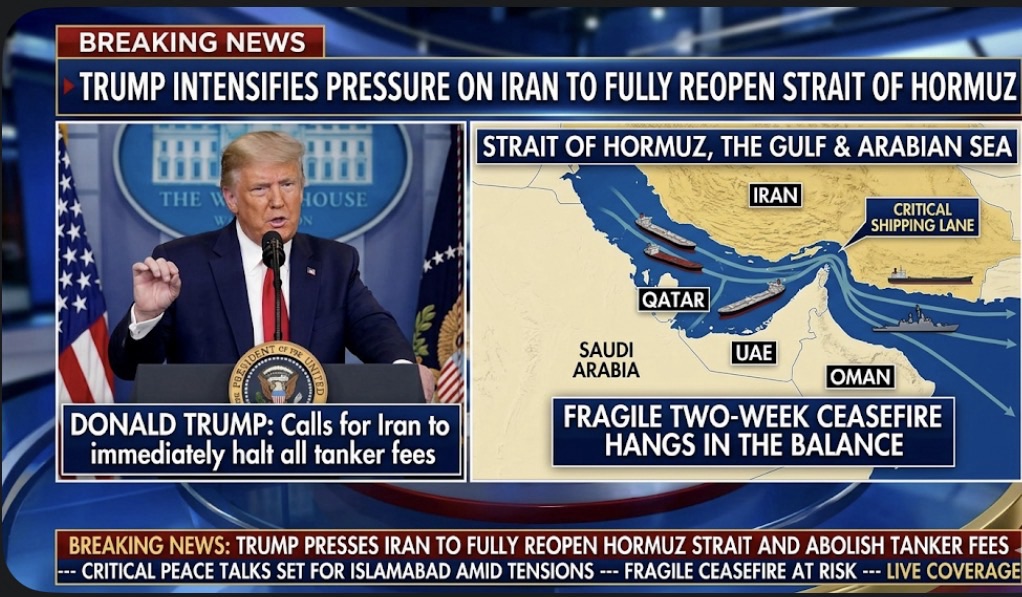
WASHINGTON / ISLAMABAD — U.S. President Donald Trump has intensified pressure on Iran to fully reopen the Strait of Hormuz and immediately halt all tanker transit fees, warning that the fragile two-week ceasefire could collapse if Tehran fails to comply ahead of critical peace talks in Islamabad.
The strategic waterway, which carries roughly a quarter of the world’s seaborne oil, remains largely restricted despite the ceasefire agreement reached earlier this week. Hundreds of commercial vessels are still waiting to pass through the strait, with only limited and tightly controlled access granted under Iranian oversight.
Trump has made the reopening of the strait a central condition for maintaining the truce, signaling that continued restrictions or the imposition of transit fees would be unacceptable. U.S. officials argue that freedom of navigation must be restored without conditions, framing Iran’s actions as a direct threat to global energy stability and international trade.
Iran, however, has taken a defiant stance. Its leadership has indicated plans to expand control over the waterway, while reports suggest authorities are demanding fees for oil shipments passing through the strait. These measures have drawn widespread concern from global markets and international partners, who fear prolonged disruption could trigger economic instability.
The ceasefire itself remains under significant strain, with both sides offering conflicting interpretations of its terms. While Washington maintains that the agreement requires immediate and unrestricted access through the strait, Iranian officials argue that the conditions are still under negotiation and subject to their security oversight.
Diplomatic efforts are now focused on upcoming talks in Islamabad, where negotiators are expected to address key disputes, including maritime security and Iran’s nuclear program. The ceasefire, brokered with the assistance of Pakistan, was intended as a temporary measure to create space for broader negotiations, but its future now appears uncertain.
International leaders have also become involved in efforts to stabilize the situation. British Prime Minister Keir Starmer has discussed coordinated strategies with Trump to help reopen the strait and restore normal shipping activity, underscoring the global stakes tied to the الأزمة.
With tensions still high and military forces on alert, the coming negotiations are widely seen as a निर्णायक moment. Failure to reach an agreement could not only collapse the ceasefire but also risk reigniting a broader regional conflict with far-reaching consequences for global energy markets and security.

JD Vance Declares U.S. Position Firm in Pakistan: Iran Must Provide Affirmative Commitment to Abandon Nuclear Weapons and Eliminate Rapid Breakout Capabilities

Taylor Swift and Travis Kelce Reportedly Set New Wedding Date as Guests Sign Strict NDAs for Mystery NYC Venue

Taylor Swift’s Inner Circle Prepares Special Wedding Day Surprise for Her and Travis Kelce

Travis Kelce Takes Break on Golf Trip Days After Public Debut with Taylor Swift

Taylor Swift & Travis Kelce Set Wedding Plans in Motion with Invitations

In an Emotional and Heartbreaking Announcement, Kansas City Chiefs head Coach Andy Reid Confirms Divorce from Wife Tammy Reid After 41 Years of Marriage, Saying “It’s Painful, But We Have To”

Donna Kelce Weds boyfriend Adam Scott in Elegant Ceremony as Sons Travis Kelce and Jason Kelce Share Emotional Moment; Ex-Husband Ed Kelce and Taylor Swift Absent

Taylor Swift’s with Wedding Details NFL Travis Kelce Leaked, Including Date And Location

As Vice President JD Vance Leads US Delegation in Islamabad Peace Talks with Iran, President Donald Trump Boasts of Starting Hormuz Mine Clearance Operations Despite Iranian Claims of Issuing a 30-Minute Ultimatum to an Approaching US Destroyer

U.S. Warships Cross Strait of Hormuz for First Time Since Iran War as Trump Vows the Key Oil Route Will Reopen ‘Fairly Soon’ Regardless of Tehran’s Cooperation Amid Fragile Ceasefire
Mission Largely Accomplished: Trump Asserts Iran Has Been Militarily Defeated After Weeks of Precision Strikes, Now Directing Efforts to Fully Restore Unrestricted Traffic Through the Strait of Hormuz Under the New Two-Week Ceasefire Agreement
