
NFL
JD Vance Declares U.S. Position Firm in Pakistan: Iran Must Provide Affirmative Commitment to Abandon Nuclear Weapons and Eliminate Rapid Breakout Capabilities

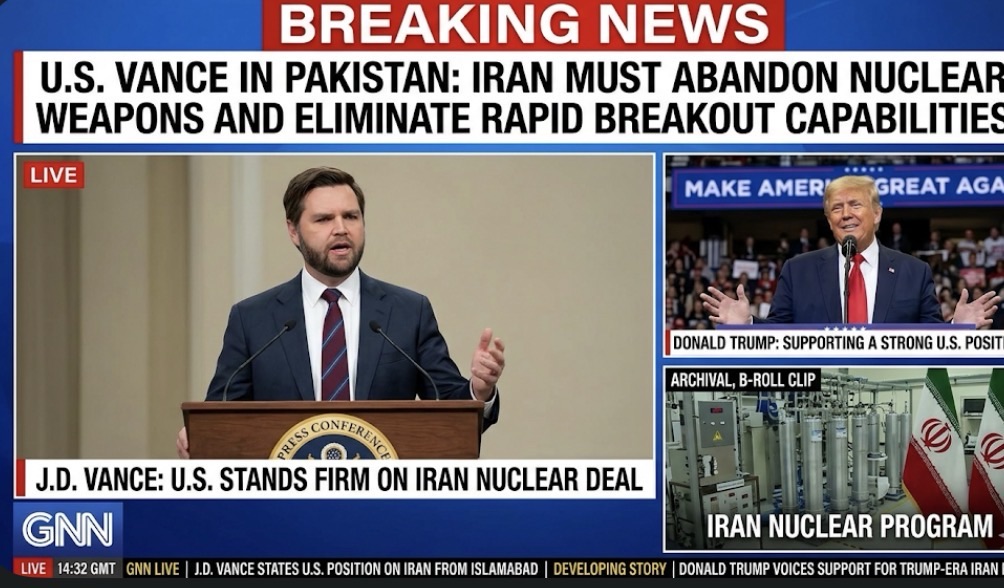
U.S. Vice President JD Vance has declared that the United States is maintaining a firm position in ongoing negotiations with Iran, stressing that any potential agreement must include an explicit and verifiable commitment from Tehran to abandon nuclear weapons ambitions and eliminate its capacity for rapid nuclear “breakout.”
Speaking after high-level talks in Pakistan, Vance reiterated that Washington’s demands are non-negotiable, stating that Iran must not only reject the development of nuclear weapons but also dismantle the infrastructure that could allow it to quickly assemble one in the future. He emphasized that preventing a breakout capability is essential to ensuring long-term regional stability and global security.
The remarks came after marathon negotiations between U.S. and Iranian delegations failed to produce a breakthrough. Discussions reportedly lasted more than 20 hours but ended without agreement, as both sides remained divided over the scope of nuclear restrictions and sanctions relief.
U.S. officials maintained that any deal must go beyond basic limits on uranium enrichment and include strict verification measures, continuous international inspections, and structural limitations on Iran’s nuclear program. The goal, according to American negotiators, is to ensure that Iran cannot covertly or rapidly develop a nuclear weapon under any circumstances.
Iranian representatives, however, resisted the proposed conditions, arguing that the demands were overly restrictive and undermined their sovereign right to pursue nuclear energy for peaceful purposes. Tehran also pushed for broader sanctions relief and guarantees against future military action, which further complicated the negotiations.
The collapse of the talks marks a setback for diplomatic efforts aimed at easing tensions between Washington and Tehran, with both sides acknowledging significant gaps remain on core issues. Despite the failure to reach an agreement, officials indicated that diplomatic channels remain open for future engagement.
The negotiations were widely viewed as a critical opportunity to reduce regional tensions and address long-standing concerns over Iran’s nuclear program. However, the inability to bridge fundamental differences has left the situation unresolved, raising uncertainty about the next steps in the diplomatic process.
For now, the firm stance outlined by Vance signals that the United States is unlikely to soften its requirements, particularly on preventing any pathway that could allow Iran to quickly develop nuclear weapons capability.

Iran Rejects Trump Administration’s Final Best Offer on Nuclear Program as VP JD Vance Returns Empty-Handed from High-Stakes Islamabad Peace Talks

JD Vance Declares U.S. Position Firm in Pakistan: Iran Must Provide Affirmative Commitment to Abandon Nuclear Weapons and Eliminate Rapid Breakout Capabilities

Taylor Swift and Travis Kelce Reportedly Set New Wedding Date as Guests Sign Strict NDAs for Mystery NYC Venue

Taylor Swift’s Inner Circle Prepares Special Wedding Day Surprise for Her and Travis Kelce

Travis Kelce Takes Break on Golf Trip Days After Public Debut with Taylor Swift

Taylor Swift & Travis Kelce Set Wedding Plans in Motion with Invitations

In an Emotional and Heartbreaking Announcement, Kansas City Chiefs head Coach Andy Reid Confirms Divorce from Wife Tammy Reid After 41 Years of Marriage, Saying “It’s Painful, But We Have To”

Donna Kelce Weds boyfriend Adam Scott in Elegant Ceremony as Sons Travis Kelce and Jason Kelce Share Emotional Moment; Ex-Husband Ed Kelce and Taylor Swift Absent

Taylor Swift’s with Wedding Details NFL Travis Kelce Leaked, Including Date And Location

As Vice President JD Vance Leads US Delegation in Islamabad Peace Talks with Iran, President Donald Trump Boasts of Starting Hormuz Mine Clearance Operations Despite Iranian Claims of Issuing a 30-Minute Ultimatum to an Approaching US Destroyer
