
NFL
Iran’s Central Military Command Rejects US President Donald Trump’s 48-Hour Ultimatum to Accept a Peace Deal or Risk Destruction of the Country’s Vital Infrastructure, Branding the Threat as a Sign of “Helpless and Nervous” Weakness

Iran’s central military command has firmly rejected a 48-hour ultimatum issued by U.S. President Donald Trump, dismissing the warning as a sign of “helpless and nervous weakness as tensions between United States and Iran continue to escalate.
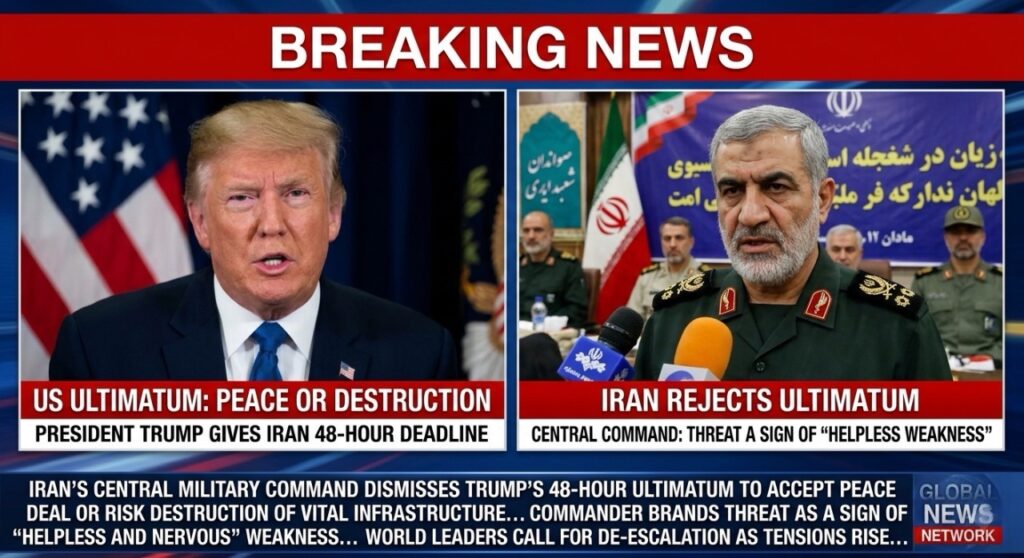
The ultimatum, delivered amid an intensifying war, demanded that Iran comply with U.S. conditions—including reopening the strategically vital Strait of Hormuz—or face large-scale military strikes targeting critical infrastructure such as energy and water systems. Trump warned that failure to meet the deadline would result in severe consequences, stating that “all hell” could be unleashed if Tehran refused to act.
In a swift and defiant response, Iranian military leadership rejected both the timeline and the terms, arguing that Washington’s threats reflect desperation rather than strength. Officials characterized the ultimatum as evidence of instability within the U.S. administration, insisting that Iran would not be coerced into submission under pressure.
The exchange marks a sharp escalation in rhetoric between the two adversaries, with both sides increasingly adopting uncompromising positions. While the U.S. has intensified military and political pressure, Iran has continued to resist ceasefire proposals and externally imposed agreements, signaling its intention to negotiate only on its own terms—or continue the conflict.
The standoff comes as the broader conflict enters a more dangerous phase. The Strait of Hormuz—one of the world’s most critical oil transit routes—remains a central point of contention, with disruptions already affecting global energy markets and raising fears of wider regional instability.
Analysts warn that the hardening positions on both sides increase the risk of further escalation. Trump’s strategy of combining ultimatums with ongoing indirect negotiations appears aimed at forcing rapid concessions, but Iran’s rejection suggests such tactics may instead deepen resistance and prolong the conflict.
As deadlines loom and rhetoric intensifies, the situation remains highly volatile, with the possibility of broader military confrontation growing if diplomatic efforts fail to gain traction.

U.S. Special Forces Pull Off Bold Double Rescue in Hostile Iran Territory; Trump: “Our Military Is Unmatched”Both pilot and weapons systems officer now safe following F-15E shoot-down.
Iran’s Central Military Command Rejects US President Donald Trump’s 48-Hour Ultimatum to Accept a Peace Deal or Risk Destruction of the Country’s Vital Infrastructure, Branding the Threat as a Sign of “Helpless and Nervous” Weakness

President Donald Trump Reacts to Iran’s Downing of US F-15E Fighter Jet Over Its Territory: One Crew Member Rescued, Search Ongoing for the Second, Yet Trump Declares the Incident ‘Won’t Affect’ Indirect Negotiations with Tehran, Adding ‘It’s War, We’re in War’

Iran Firmly Rejects All Temporary Ceasefire Proposals from the US and Israel, Including Trump’s Latest 48-Hour Offer, as Tehran Insists on Its Own Conditions for Ending the Conflict Amid Ongoing Regional Strikes

“Time Is Running Out”: President Trump Warns Iran Has Just 48 Hours Left to Reach a Deal or Open the Vital Strait of Hormuz Before Massive US Retaliation Unleashes “All Hell”

“As Donald Trump’s Administration Wages War on Iran, Defense Secretary Pete Hegseth Ousts Army Chief Gen. Randy George, Who Allegedly Declares That a ‘Madman’ Is Steering America’s Military Toward Ruin”

Breaking: Iranian Outlets Allege US Pilot Found Hiding in Cave, Fooled by Bounty-Hunting Civilians Promising Safe Return to America Before IRGC Handover — Trump Responds That F-15E Loss Is Just ‘War’ and Won’t Derail Talks

Power Struggle Threatens U.S. Military Stability in Trump’s Second Term: Plagued by Insecurity and Fears That President Trump Could Elevate Dan Driscoll in His Place, Pete Hegseth Orders the Immediate Retirement of Gen. Randy George and Launches a Crackdown on Perceived Rivals

Amid Iran War, Trump’s Defense Secretary Pete Hegseth Forces Out Army Chief Gen. Randy George and Other Senior Officers Due to Fears of Losing His Job

From Wedding Vows to Battlefield Loss: Newlywed Captain Ethan Walker Named as Second F-15E Pilot Killed After Iran Downs U.S. Fighter Jet, Leaving Nation in Mourning as Trump Receives Urgent Update

Heartbreaking News Emerges as Andy Reid’s Wife, Tammy Reid, Reportedly Dies, With Fans, Players, and the Kansas City Chiefs Organization Sending Condolences
