
NFL
Iran Firmly Rejects All Temporary Ceasefire Proposals from the US and Israel, Including Trump’s Latest 48-Hour Offer, as Tehran Insists on Its Own Conditions for Ending the Conflict Amid Ongoing Regional Strikes

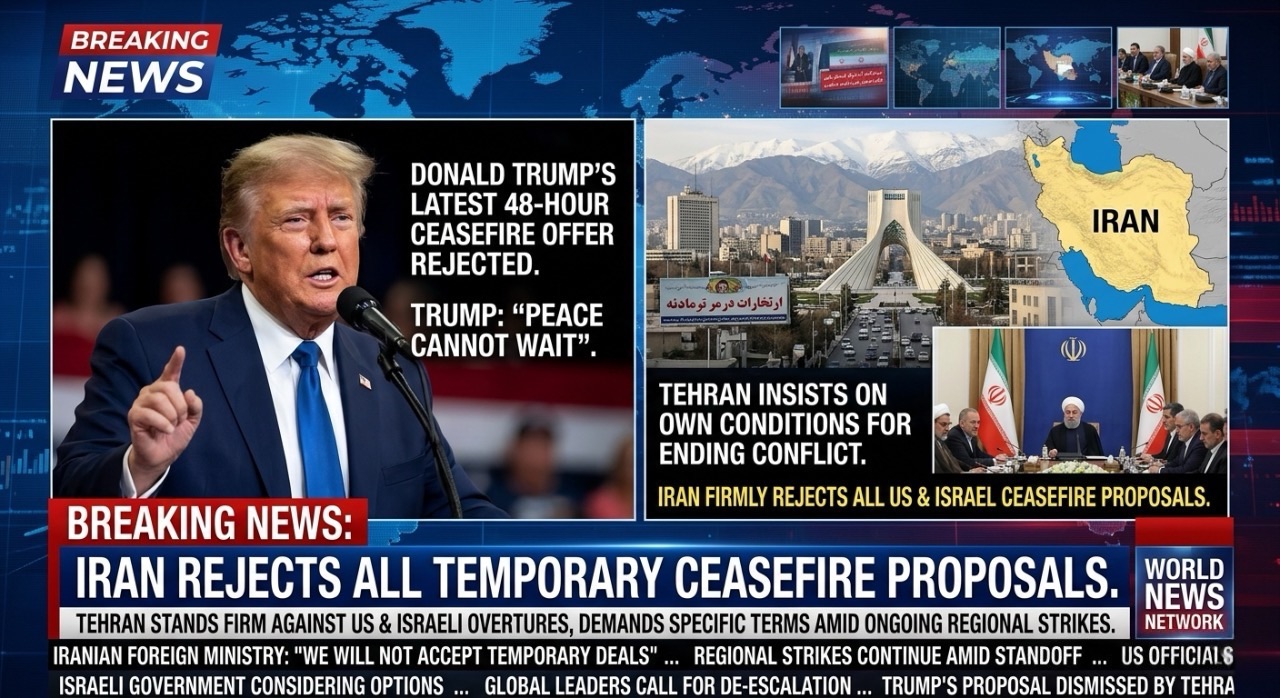
Iran has firmly rejected a proposed 48-hour ceasefire put forward by the United States and supported by Israel, signaling a deepening stalemate in an already volatile regional conflict.
According to reports from Iranian media cited by international outlets, the proposal—allegedly delivered through an intermediary nation—was dismissed outright by Tehran, which continues to insist on its own conditions for any cessation of hostilities.
The rejection comes amid escalating military exchanges across the region, including missile strikes, air raids, and growing civilian casualties. Iran’s leadership has made it clear that temporary pauses in fighting are not sufficient, emphasizing that any agreement must address broader strategic and political demands.
U.S. President Donald Trump had earlier issued a stark 48-hour ultimatum, warning Tehran to comply with demands—including reopening the critical Strait of Hormuz—or face overwhelming military retaliation.
Despite these warnings, Iran’s refusal underscores a widening gap between the two sides. Iranian officials have also denied claims that they previously sought a ceasefire, portraying such assertions as misinformation and reiterating their readiness to continue military operations under current conditions.
The ongoing conflict has already triggered significant global repercussions. The Strait of Hormuz—one of the world’s most vital oil transit routes—remains under threat, raising concerns about energy supplies and economic instability worldwide. Meanwhile, the downing of U.S. military aircraft and intensified Israeli strikes on Iranian and allied targets have further inflamed tensions.
Diplomatic efforts appear increasingly fragile, with no clear pathway to de-escalation. Analysts warn that Iran’s rejection of even a short-term ceasefire reflects a strategic calculation: avoiding temporary pauses that could allow opposing forces to regroup while pushing instead for more comprehensive concessions.
As the conflict grinds on, the risk of a broader regional war continues to grow, with international observers urging renewed diplomatic engagement to prevent further escalation.
Iran’s Central Military Command Rejects US President Donald Trump’s 48-Hour Ultimatum to Accept a Peace Deal or Risk Destruction of the Country’s Vital Infrastructure, Branding the Threat as a Sign of “Helpless and Nervous” Weakness

President Donald Trump Reacts to Iran’s Downing of US F-15E Fighter Jet Over Its Territory: One Crew Member Rescued, Search Ongoing for the Second, Yet Trump Declares the Incident ‘Won’t Affect’ Indirect Negotiations with Tehran, Adding ‘It’s War, We’re in War’

Iran Firmly Rejects All Temporary Ceasefire Proposals from the US and Israel, Including Trump’s Latest 48-Hour Offer, as Tehran Insists on Its Own Conditions for Ending the Conflict Amid Ongoing Regional Strikes

“Time Is Running Out”: President Trump Warns Iran Has Just 48 Hours Left to Reach a Deal or Open the Vital Strait of Hormuz Before Massive US Retaliation Unleashes “All Hell”

“As Donald Trump’s Administration Wages War on Iran, Defense Secretary Pete Hegseth Ousts Army Chief Gen. Randy George, Who Allegedly Declares That a ‘Madman’ Is Steering America’s Military Toward Ruin”

Breaking: Iranian Outlets Allege US Pilot Found Hiding in Cave, Fooled by Bounty-Hunting Civilians Promising Safe Return to America Before IRGC Handover — Trump Responds That F-15E Loss Is Just ‘War’ and Won’t Derail Talks

Power Struggle Threatens U.S. Military Stability in Trump’s Second Term: Plagued by Insecurity and Fears That President Trump Could Elevate Dan Driscoll in His Place, Pete Hegseth Orders the Immediate Retirement of Gen. Randy George and Launches a Crackdown on Perceived Rivals

Amid Iran War, Trump’s Defense Secretary Pete Hegseth Forces Out Army Chief Gen. Randy George and Other Senior Officers Due to Fears of Losing His Job

From Wedding Vows to Battlefield Loss: Newlywed Captain Ethan Walker Named as Second F-15E Pilot Killed After Iran Downs U.S. Fighter Jet, Leaving Nation in Mourning as Trump Receives Urgent Update

Heartbreaking News Emerges as Andy Reid’s Wife, Tammy Reid, Reportedly Dies, With Fans, Players, and the Kansas City Chiefs Organization Sending Condolences

Trump Vows to Bomb Iran ‘Back to the Stone Ages’ as Search Continues for Missing Pilot Following F-15E Fighter Jet Shootdown; Rescued Crew Member Now Receiving Medical Treatment
