
NFL
Iran Rejects Trump Administration’s Final Best Offer on Nuclear Program as VP JD Vance Returns Empty-Handed from High-Stakes Islamabad Peace Talks

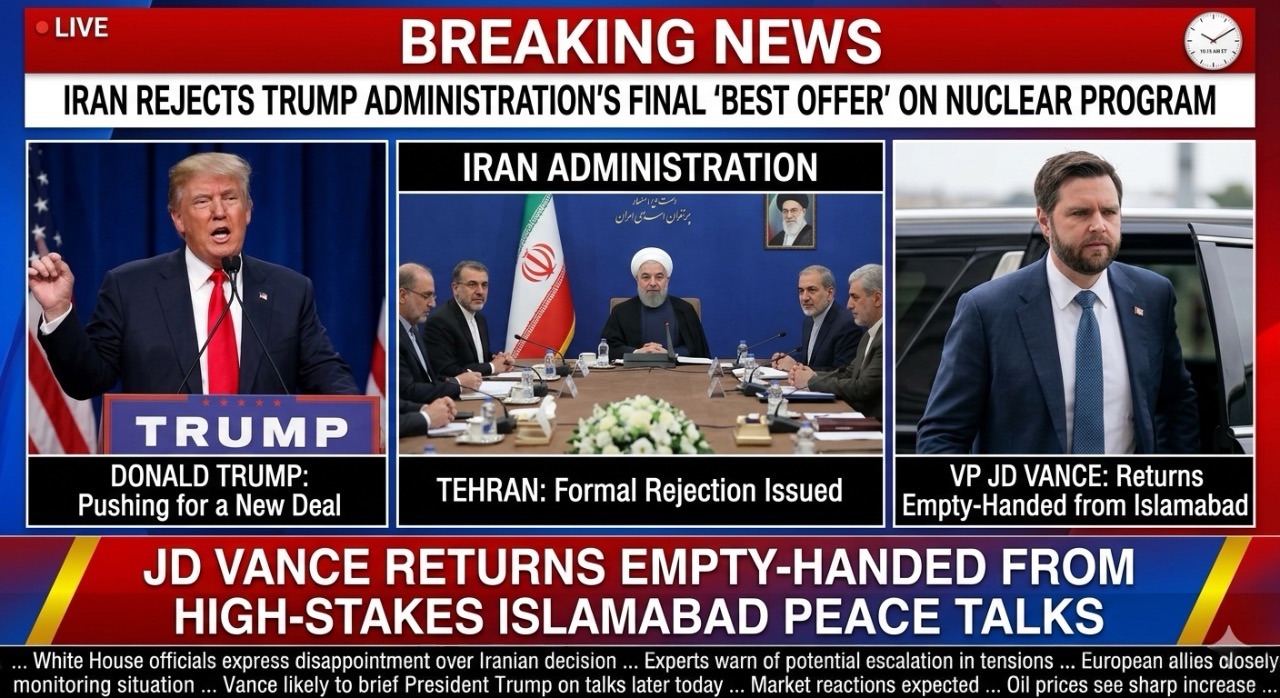
The United States and Iran have failed to reach an agreement after high-stakes peace talks in Islamabad ended without a breakthrough, as Iran rejected what the Trump administration described as its “final best offer” on Tehran’s nuclear program.
The negotiations, which lasted more than 20 hours, were led by U.S. Vice President JD Vance and aimed at securing a comprehensive deal to curb Iran’s nuclear activities while stabilizing the region following weeks of heightened tensions. However, Vance departed the talks empty-handed after both sides remained firmly divided on key issues.
At the center of the impasse was Washington’s demand for a binding and long-term guarantee that Iran would never pursue nuclear weapons. U.S. officials framed the condition as essential to any lasting agreement, but Iranian negotiators rejected the proposal, arguing that it undermined their sovereignty and their right to maintain a civilian nuclear program.
The Trump administration’s offer reportedly included strict limits on uranium enrichment, enhanced international inspections, and broader provisions tied to regional security and maritime access, particularly in the strategically critical Strait of Hormuz. In return, Iran was expected to receive phased sanctions relief and potential economic incentives.
Tehran, however, pushed back against the scope of the restrictions and called for more immediate and comprehensive sanctions relief. Iranian officials also raised concerns over recent U.S. military actions and demanded guarantees against future strikes, further complicating negotiations.
Following the talks, Vance said the U.S. had approached the discussions in “good faith” but acknowledged that the gap between the two sides remained too wide to bridge. Despite the setback, he noted that diplomatic channels remain open, though no timeline has been set for future negotiations.
The collapse of the Islamabad talks represents a significant setback for Donald Trump’s administration, which had positioned the meeting as a critical step toward resolving both the nuclear dispute and broader regional tensions.
The failure to secure a deal leaves uncertainty surrounding the fragile ceasefire in the region and raises concerns about the potential for renewed escalation. It also prolongs instability in global energy markets, as disruptions linked to tensions in the Strait of Hormuz continue to affect international oil flows.
For now, the diplomatic deadlock highlights the deep divisions that persist between Washington and Tehran, with the future of negotiations—and the fate of Iran’s nuclear program—remaining uncertain.

Donald Trump Escorted From White House Correspondents’ Dinner After Shooting as FBI Examines Last-Minute 5 BTC Transaction Linked to Suspect
Tehran Officially States China Is Destined to Replace America as the Dominant Global Power, Citing Shifting International Alliances
President Trump Rejects Quick Iran Agreement, Doubles Down on Blockade That Denies Regime Money and Weakens Its Economy

President Trump Declares US Will Take Over Cuba Almost Immediately After Completing Military Operations in Iran: ‘We’ll Finish One First, I Like to Finish a Job’

Tehran Sends Fresh Peace Offer to Washington Through Pakistan Amid Fragile Ceasefire – Insiders Warn This Could Be the Last Chance to Avoid Escalation in the 2026 Iran Conflict

Trump Announces Review of Possible U.S. Troop Reductions in Germany While Threatening Withdrawals from Italy and Spain Over Allies’ Refusal to Support American Military Operations Against Iran

As Trump Rejects Iran’s Proposal to Reopen the Strait of Hormuz and Prioritize Nuclear Talks Later, Parliament Deputy Speaker Warns Washington Must Yield to Tehran’s Terms or Confront Nationwide Resistance and Potential Unprecedented Retaliatory Actions

Diplomatic Standoff Intensifies: US Dismisses Iran’s Recent Peace Initiative While Iranian Officials Insist They Require No External Talks to Determine Their Path Forward

Trump Administration Expresses Dissatisfaction with Iran’s Latest Proposal to Reopen the Strait of Hormuz Without Immediate Concessions on Its Nuclear Program, Signaling Potential for Extended Naval Blockade

Trump Administration Remains Skeptical of Iran’s Latest Peace Proposal That Seeks to Reopen the Strait of Hormuz and End the War Without Addressing the Nuclear Program Upfront

China Delivers Strong Rejection to US Threats of 100% Tariffs, Vowing to Continue Iranian Oil Imports Despite American Pressure on Beijing’s Energy Security
