
NFL
Mission Largely Accomplished: Trump Asserts Iran Has Been Militarily Defeated After Weeks of Precision Strikes, Now Directing Efforts to Fully Restore Unrestricted Traffic Through the Strait of Hormuz Under the New Two-Week Ceasefire Agreement

U.S. President Donald Trump has declared that Iran has been “militarily defeated” following weeks of sustained airstrikes, signaling a shift from active conflict toward stabilizing global energy routes—particularly the critical Strait of Hormuz. The announcement comes amid a fragile two-week ceasefire agreement intended to halt hostilities and create space for broader peace negotiations.
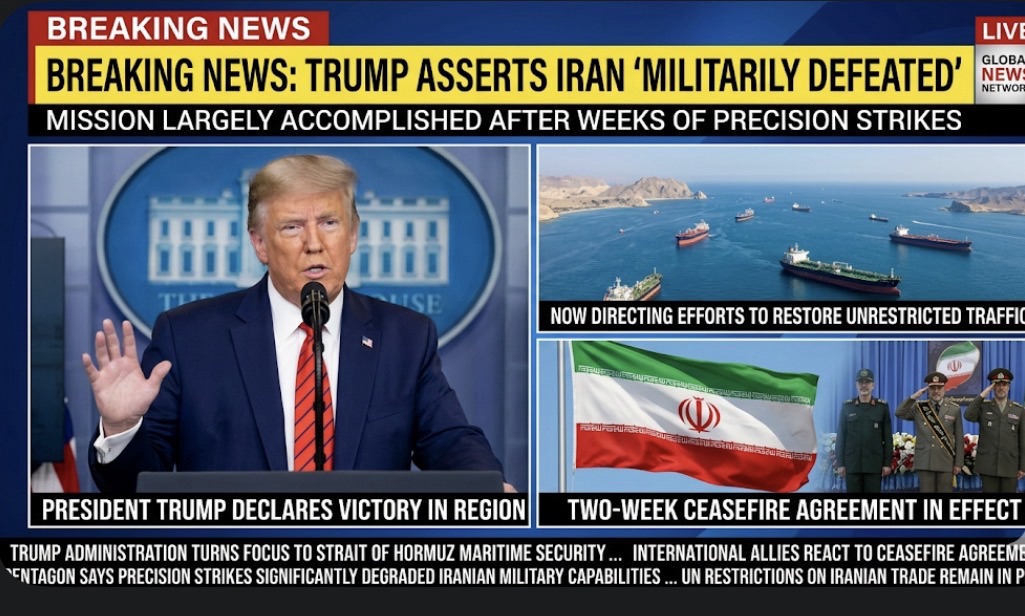
Trump’s remarks emphasize that U.S. and allied forces have achieved their primary military objectives, framing the campaign as a decisive blow to Iran’s capabilities. However, analysts caution that while Iran has suffered significant damage, it retains strategic leverage—most notably its control over the Strait of Hormuz, a chokepoint through which roughly 20% of global oil supplies pass.
Despite the ceasefire, maritime traffic through the strait remains severely restricted. Iran has continued to impose conditions on passage, allowing only limited shipping activity and maintaining tight military oversight. This has kept global energy markets on edge, with oil flows far below normal levels and uncertainty persisting across international supply chains.
The ceasefire itself is conditional and tenuous. It was brokered in part through international mediation and hinges on Iran’s willingness to restore safe and unrestricted navigation. While both sides have paused major military operations, accusations of violations and deep mistrust continue to threaten the agreement’s stability.
Trump has made reopening the strait a central priority of the next phase, reportedly pushing allies to contribute naval support to secure the waterway. He has expressed confidence that shipping lanes will be restored “fairly soon,” though officials acknowledge the complexity of enforcing such a move without reigniting conflict.
Critics argue that the administration’s declaration of victory may be premature. Some geopolitical analysts warn that Iran’s ability to disrupt global النفط flows—even after suffering military setbacks—demonstrates that it remains a potent regional force. Others compare the situation to past geopolitical crises, suggesting the outcome may reshape global power dynamics rather than conclude the conflict outright.
As negotiations continue, the coming weeks will be critical. The success or failure of efforts to fully reopen the Strait of Hormuz will not only determine the durability of the ceasefire but also influence global energy stability and the broader trajectory of U.S.-Iran relations.

Donald Trump Escorted From White House Correspondents’ Dinner After Shooting as FBI Examines Last-Minute 5 BTC Transaction Linked to Suspect
Tehran Officially States China Is Destined to Replace America as the Dominant Global Power, Citing Shifting International Alliances
President Trump Rejects Quick Iran Agreement, Doubles Down on Blockade That Denies Regime Money and Weakens Its Economy

President Trump Declares US Will Take Over Cuba Almost Immediately After Completing Military Operations in Iran: ‘We’ll Finish One First, I Like to Finish a Job’

Tehran Sends Fresh Peace Offer to Washington Through Pakistan Amid Fragile Ceasefire – Insiders Warn This Could Be the Last Chance to Avoid Escalation in the 2026 Iran Conflict

Trump Announces Review of Possible U.S. Troop Reductions in Germany While Threatening Withdrawals from Italy and Spain Over Allies’ Refusal to Support American Military Operations Against Iran

As Trump Rejects Iran’s Proposal to Reopen the Strait of Hormuz and Prioritize Nuclear Talks Later, Parliament Deputy Speaker Warns Washington Must Yield to Tehran’s Terms or Confront Nationwide Resistance and Potential Unprecedented Retaliatory Actions

Diplomatic Standoff Intensifies: US Dismisses Iran’s Recent Peace Initiative While Iranian Officials Insist They Require No External Talks to Determine Their Path Forward

Trump Administration Expresses Dissatisfaction with Iran’s Latest Proposal to Reopen the Strait of Hormuz Without Immediate Concessions on Its Nuclear Program, Signaling Potential for Extended Naval Blockade

Trump Administration Remains Skeptical of Iran’s Latest Peace Proposal That Seeks to Reopen the Strait of Hormuz and End the War Without Addressing the Nuclear Program Upfront

China Delivers Strong Rejection to US Threats of 100% Tariffs, Vowing to Continue Iranian Oil Imports Despite American Pressure on Beijing’s Energy Security
