
NFL
Amid Iran War, Trump’s Defense Secretary Pete Hegseth Forces Out Army Chief Gen. Randy George and Other Senior Officers Due to Fears of Losing His Job

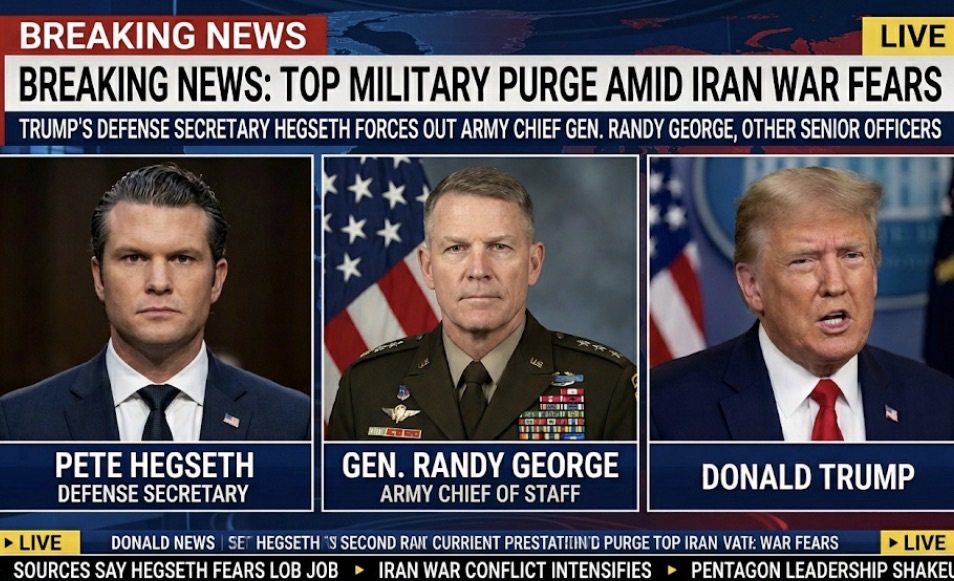
In a dramatic and controversial move during an ongoing war with Iran, U.S. Defense Secretary Pete Hegseth has forced out Army Chief of Staff Randy George along with several other senior military officers, triggering widespread concern about leadership stability inside the Pentagon.
General George, who had been expected to serve until 2027, was ordered to step down and take immediate retirement, with the Pentagon offering little public explanation for the abrupt decision.
The shake-up comes at a critical moment, as U.S. forces remain actively engaged in escalating conflict with Iran, raising alarm among defense officials about disruptions to military command and operational continuity.
Sources familiar with the situation suggest the move is part of a broader effort by Hegseth to reshape military leadership in line with the vision of President Donald Trump . Officials indicated that the administration is seeking commanders who will more closely align with its strategic and political priorities.
However, the decision has sparked intense backlash within defense circles. Critics argue that removing top generals during wartime is highly unusual and risks undermining military effectiveness. Some reports point to internal tensions, ideological disagreements, and even personal rivalries as contributing factors behind the dismissals.
The leadership purge is not limited to General George. Other high-ranking officers, including senior commanders responsible for training and operations, have also been removed in what analysts describe as a sweeping overhaul of Pentagon leadership.
General Christopher LaNeve has been named acting Army chief following George’s departure, stepping into the role at a time of heightened global tension and ongoing military operations.
The timing of the shake-up has intensified concerns among U.S. allies and military experts, who warn that internal instability could weaken coordination and decision-making during a rapidly evolving conflict. Meanwhile, political divisions in Washington appear to be deepening as the administration defends the changes as necessary, while critics label them a dangerous politicization of the armed forces.
As the Iran war continues, the full impact of this unprecedented leadership overhaul remains uncertain—but its consequences could shape the direction of U.S. military strategy in the weeks ahead.

Donald Trump Escorted From White House Correspondents’ Dinner After Shooting as FBI Examines Last-Minute 5 BTC Transaction Linked to Suspect
Tehran Officially States China Is Destined to Replace America as the Dominant Global Power, Citing Shifting International Alliances
President Trump Rejects Quick Iran Agreement, Doubles Down on Blockade That Denies Regime Money and Weakens Its Economy

President Trump Declares US Will Take Over Cuba Almost Immediately After Completing Military Operations in Iran: ‘We’ll Finish One First, I Like to Finish a Job’

Tehran Sends Fresh Peace Offer to Washington Through Pakistan Amid Fragile Ceasefire – Insiders Warn This Could Be the Last Chance to Avoid Escalation in the 2026 Iran Conflict

Trump Announces Review of Possible U.S. Troop Reductions in Germany While Threatening Withdrawals from Italy and Spain Over Allies’ Refusal to Support American Military Operations Against Iran

As Trump Rejects Iran’s Proposal to Reopen the Strait of Hormuz and Prioritize Nuclear Talks Later, Parliament Deputy Speaker Warns Washington Must Yield to Tehran’s Terms or Confront Nationwide Resistance and Potential Unprecedented Retaliatory Actions

Diplomatic Standoff Intensifies: US Dismisses Iran’s Recent Peace Initiative While Iranian Officials Insist They Require No External Talks to Determine Their Path Forward

Trump Administration Expresses Dissatisfaction with Iran’s Latest Proposal to Reopen the Strait of Hormuz Without Immediate Concessions on Its Nuclear Program, Signaling Potential for Extended Naval Blockade

Trump Administration Remains Skeptical of Iran’s Latest Peace Proposal That Seeks to Reopen the Strait of Hormuz and End the War Without Addressing the Nuclear Program Upfront

China Delivers Strong Rejection to US Threats of 100% Tariffs, Vowing to Continue Iranian Oil Imports Despite American Pressure on Beijing’s Energy Security
