
CELEBRITY
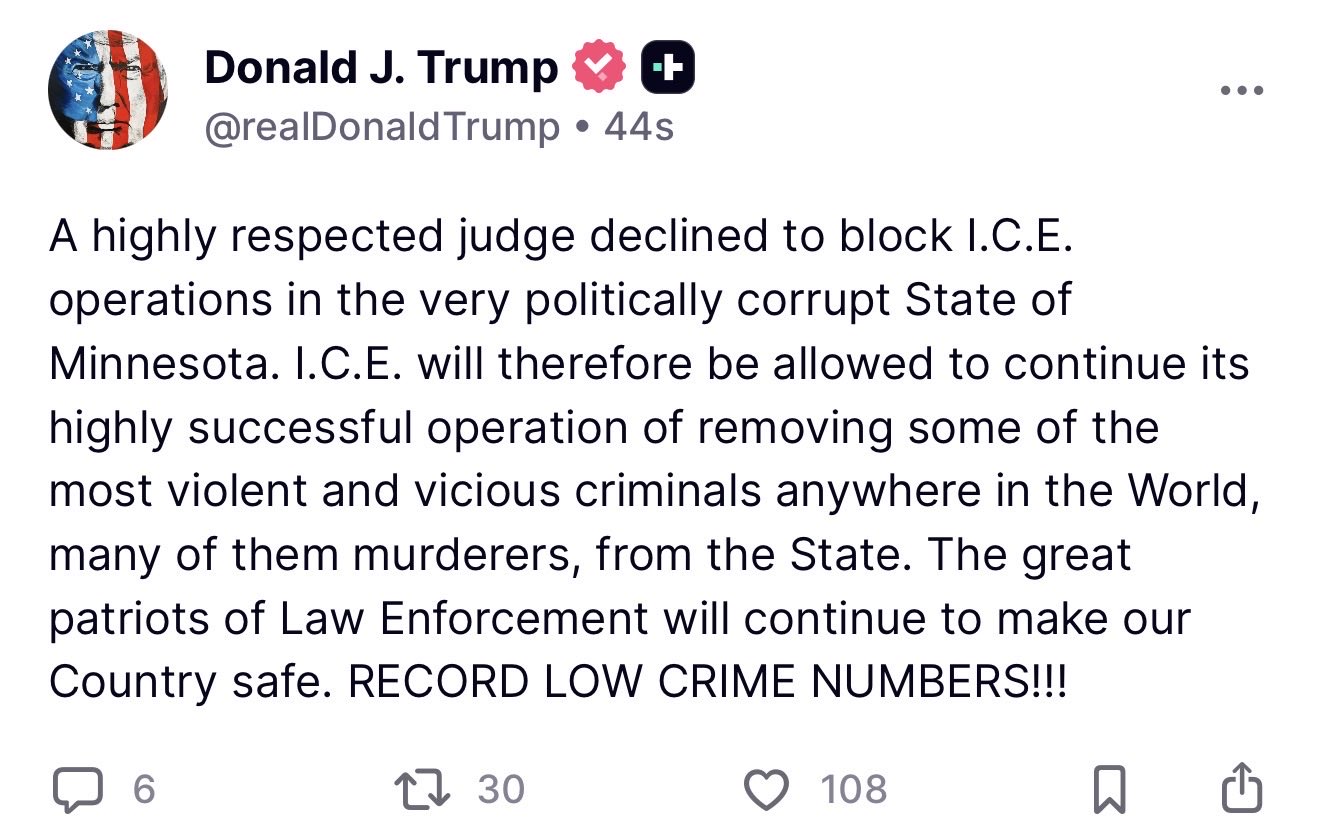
BREAKING — COURT SIDES WITH TRUMP: A judge has refused to block ICE’s intensified operations in Minnesota — a major blow to Governor Tim Walz and Minneapolis Mayor Jacob Frey. “Full steam ahead.” ICE will continue its surge, and supporters are celebrating the ruling as a decisive win for Trump and federal law enforcement. Trump responded triumphantly, saying a “highly respected judge” rejected efforts to halt ICE operations in what he called the “politically corrupt State of Minnesota.” He praised ICE for removing “violent and vicious criminals, many of them murderers,” and credited law enforcement with keeping crime at “record low levels.” But that’s not where the story ends. After Tim Walz announced his next move against ICE, reactions exploded. Some are relieved. Others are uneasy — questioning how Trump will respond now that the courts appear to be on his side. With tensions rising and the Supreme Court now backing Trump’s position, many are asking one question: what happens next?

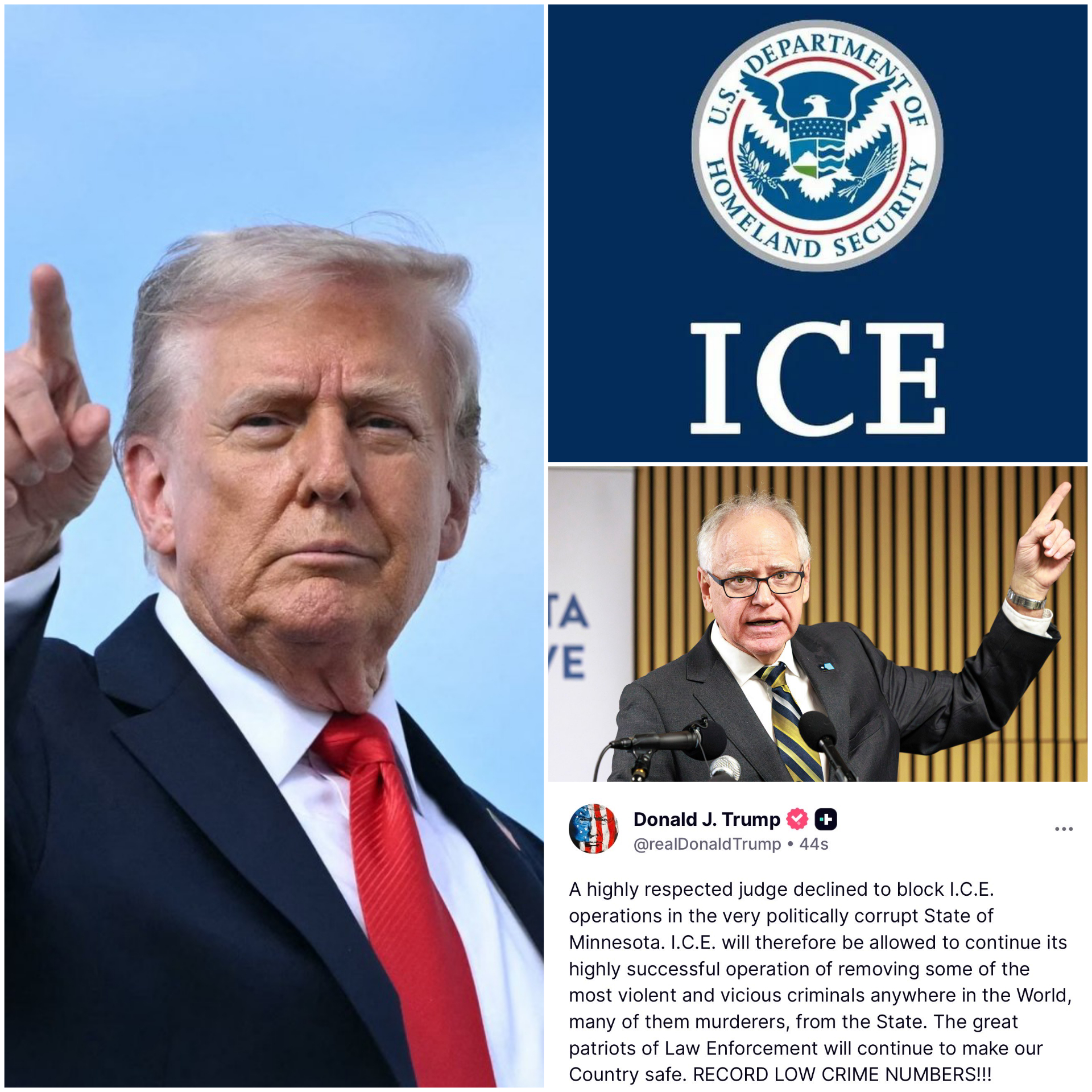
Minneapolis, MN – January 15, 2026 – In a significant development amid escalating tensions over immigration enforcement, a federal judge has refused to issue a temporary restraining order blocking U.S. Immigration and Customs Enforcement (ICE) operations in Minnesota.
The ruling allows the Trump administration’s intensified “Operation Metro Surge” to continue while the state’s broader lawsuit proceeds.
The decision came during a Wednesday hearing in U.S. District Court, where Judge Katherine Menendez denied Minnesota’s request for an immediate halt.
She emphasized that her ruling should not be interpreted as a prejudgment on the merits, noting the need for additional filings and evidence from both sides. Federal authorities must respond by early next week, keeping the case on a fast track.
President Donald Trump celebrated the outcome on social media, praising the “highly respected judge” for rejecting efforts to stop ICE in what he described as the “politically corrupt State of Minnesota.”
He highlighted the agency’s role in removing “violent and vicious criminals, many of them murderers,” and credited law enforcement for maintaining “record low crime numbers.”
The surge, involving thousands of federal agents in the Twin Cities area, has sparked widespread protests, community fear, and a separate lawsuit filed by Minnesota Attorney General Keith Ellison, along with Minneapolis and St. Paul officials.
They allege the operations constitute an unconstitutional “federal invasion,” involving warrantless arrests, excessive force, and racial profiling.
Minnesota Governor Tim Walz responded forcefully in a rare primetime address Wednesday evening, calling the deployment a “campaign of organized brutality” rather than legitimate immigration enforcement.

He urged residents to peacefully protest, document ICE activities on their phones, and build evidence for future accountability. “We will reclaim our communities from Donald Trump,” Walz declared, while emphasizing non-violence.
Minneapolis Mayor Jacob Frey has echoed calls for ICE to leave the city, citing disruptions to local public safety and daily life.
The ruling marks a temporary victory for the Trump administration in its aggressive push to prioritize deportations in Democratic-led jurisdictions. However, the case remains active, with potential for further hearings or appeals.
Tensions continue to rise, as questions linger about next steps—including possible federal escalation—if protests intensify.
As the legal battle unfolds, Minnesotans are left watching closely, with many wondering how this high-stakes clash between state sovereignty and federal authority will resolve.

Travis Kelce AND Taylor Swift ARE MARRIED! WEDDING CEREMONY CAPTIVATES FANS AND A-LISTERS ALIKE – Travis Kelce and Taylor Swift’s wedding is no longer a rumor. The couple officially tied the knot in a lavish ceremony that’s got the entire world talking!

Travis Kelce Caught Kissing Mystery Woman at His Bachelor Party at Bird Street — The Identity of the Woman Has Been Confirmed as Taylor’s Best…

A Surprise Homecoming: Jason and Travis Kelce have made a remarkable move that few expected. The NFL brothers recently purchased a modest house in Cleveland Heights, Ohio, close to where they were raised and first dreamed of football greatness. Rather than keeping it for themselves, they are turning the property into… see more.

BREAKING: Taylor Swift’s Divorced Parents, Andrea and Scott Swift, Remarry in a Private, Elegant Wedding — Travis Kelce Comforts Emotional Taylor as She Opens Up About the Pain She’s Carried Since Their Split… But Fans Are Left Stunned When She Announces What Many Have Suspected All Along: She’s Expecting… See More Photos

Stevie nicks and Tim McGraw set to perform at Taylor Swift and Travis Kelce’s wedding – which will be ‘bigger than the Met Gala’s. This is what we know 👇

Taylor Swift and Travis Kelce Reveal Plans for a Private Rehearsal Dinner Before Hosting an Epic 1,000-Guest Wedding Celebration

After weeks of speculation over Taylor Swift and Travis Kelce’s wedding plans, a permit has been filed for an event at Madison Square Garden over the July 4 weekend. Here’s what we know.

BREAKING: Serious Incident at the Mahomes Residence — Travis Kelce Faces Severe … After Deadly Dispute with Patrick Mahomes. Early this morning, police swarmed the home of football star Patrick Mahomes after a domestic dispute escalated into an unthinkable act of violence. Reports indicate that Travis Kelce has been confirmed…

OMG! TAYLOR IS MARRIED! You won’t believe the deeply emotional moment Taylor Swift walked down the aisle with her parents! The breathtaking custom dress, the bittersweet tears, and Travis waiting at the altar… it’s pure magic!

OMG! Travis Kelce and Taylor Swift Turn Heads at Met Gala 2026, Turning the Red Carpet into a Romantic Stage—but Fans Roast Their Outfits

New York Knicks Say They’ll be Declining White House Invitation from Donald Trump After NBA Championship Victory, Announce Massive Post-Parade Celebration Headlined by Taylor Swift
